
Beschreibung
Die Hybrid-Logik: Blau trifft Grün
-
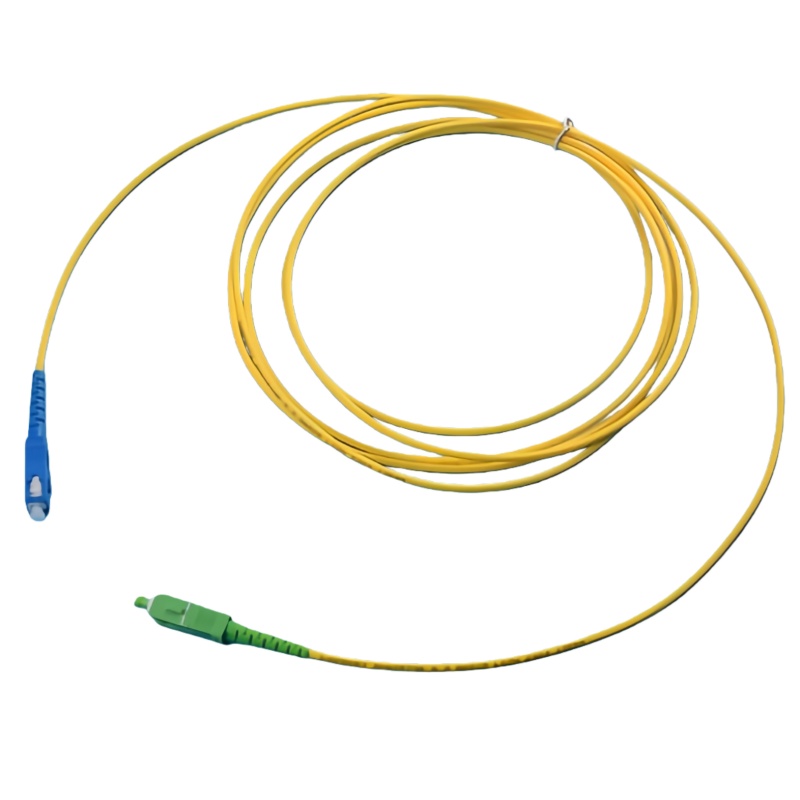
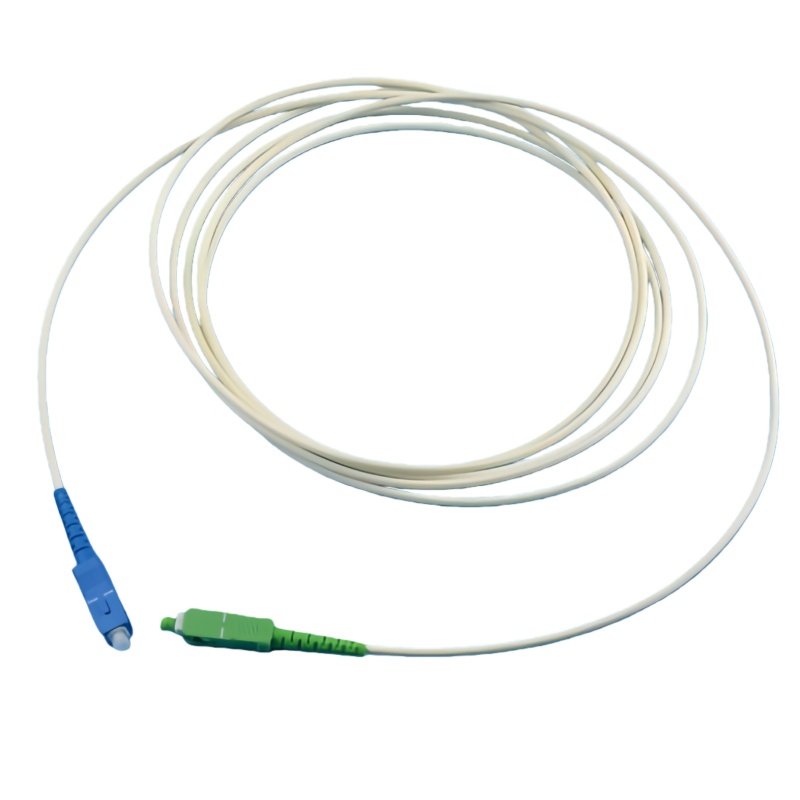
SC/UPC (Blau): Das “Ultra Physical Contact”-Ende. Es ist der Standard für die allgemeine digitale Datenübertragung und Unternehmens-LANs, bei denen eine flache, hochpräzise Politur ausreicht.
-
SC/APC (Grün): Das “abgewinkelte physikalische Kontaktende”. Mit einer Neigung von 8 Grad ist es für CATV-, GPON- und hochbitratige Systeme obligatorisch, um Rückreflexionen zu vermeiden.
-
SM SX (Single Mode Simplex): Ein einziger 9/125μm OS2-Glasfaserstrang, der die Kommunikation über große Entfernungen mit nahezu unbegrenzter Bandbreitenkapazität unterstützt.
Aufschlüsselung der technischen Leistung
Um eine zuverlässige Verbindung zu gewährleisten, muss der Übergang zwischen UPC und APC nahtlos sein. Unsere Kabel erfüllen die folgenden Industriestandards für 2026:
| Spezifikation | SC/UPC-Seite | SC/APC-Seite | Professioneller Nutzen |
| Stecker Farbe | Blau | Grün | Sofortiger visueller Anschlussabgleich |
| Rückflussdämpfung | $\geq 50 \text{ dB}$ | $\geq 65 \text{ dB}$ | Schützt Quelllaser vor Lärm |
| Einfügedämpfung | $\leq 0,3 \text{ dB}$ | $\leq 0,3 \text{ dB}$ | Minimale Abschwächung des Lichtsignals |
| Faserqualität | OS2 (9/125μm) | OS2 (9/125μm) | G.652.D/G.657.A1-konform |
| Material der Jacke | LSZH (Gelb) | LSZH (Gelb) | Brandsicher und bauaufsichtlich zugelassen |
| Paarungszyklen | $>1000$ mal | $>1000$ mal | Langlebig für häufiges Nachbessern |
Warum dieser Jumper für moderne Netzwerke unerlässlich ist
1. Nahtlose Interoperabilität
Wenn ISP-Netze auf XGS-PON oder 50G-PON aufgerüstet werden, werden auf der “letzten Meile” häufig APC-Anschlüsse verwendet. Das bestehende Backbone kann jedoch weiterhin UPC sein. Dieses Kabel bietet den direkten Weg, diese beiden Welten zu verbinden, ohne dass ganze Patchfelder ersetzt werden müssen.
2. Schutz vor Rückreflexion
Durch die Verwendung des APC (Grün) Ende Ihres empfindlichen Senders (z. B. eines CATV-Lasers oder eines EDFA), stellen Sie sicher, dass das reflektierte Licht in den Fasermantel geleitet wird, wodurch eine hohe Rückflussdämpfung von $\geq 65\text{dB}$ auch wenn das andere Ende ein Standard-UPC ist.
3. Platzsparendes Simplex-Design
Für BiDi (bi-direktional) Verbindungen, warum zwei Fasern verwenden, wenn eine genügt? Das Simplex-Design (SX) reduziert das Kabelvolumen in den Kabelkanälen und ist in engen ODF-Schränken (Optical Distribution Frame) einfacher zu handhaben.
Experten-Fragen und Antworten: Einblicke in die Praxis
F: Kann ich das blaue Ende in einen grünen Anschluss stecken, nur um einen kurzen Test durchzuführen?
A: Nein. Dies ist der schnellste Weg, eine Verbindung zu ruinieren. Ein UPC-Ende ist flach und ein APC-Anschluss ist abgewinkelt. Beim Zusammenstecken entsteht ein physischer “Punktkontakt”, der beide Keramikhülsen zerkratzen kann und definitiv einen Luftspalt mit massivem Signalverlust verursacht.
F: Warum ist die Rückflussdämpfung an beiden Enden unterschiedlich?
A: Die Rückflussdämpfung ist eine Eigenschaft der Politur des Steckers. Der 8-Grad-Winkel auf dem APC (Grün) Ende ist mathematisch so konzipiert, dass es die Reflexion effektiver reduziert als das flache UPC (Blau) Ende, weshalb er eine höhere Bewertung hat (65 dB gegenüber 50 dB).
F: Ist dieses Kabel mit 100G-Geschwindigkeiten kompatibel?
A: Ganz genau. Die OS2 Singlemode-Glasfaserkern ist mehr als fähig, 100G, 400G und sogar 800G Datenraten zu verarbeiten, vorausgesetzt, Ihre Transceiver und Netzwerkgeräte sind für diese Geschwindigkeiten ausgelegt.
F: Wie kann ich dieses Kabel in einem überfüllten Regal identifizieren?
A: Schauen Sie sich einfach die Stecker und Gehäuse an. Ein Ende wird sein Blau und das andere wird sein Grün. Diese Farbcodierung ist ein internationaler Standard, um zu verhindern, dass Techniker falsche Verbindungen herstellen.

Bewertungen
Es sind noch keine Bewertungen vorhanden.