
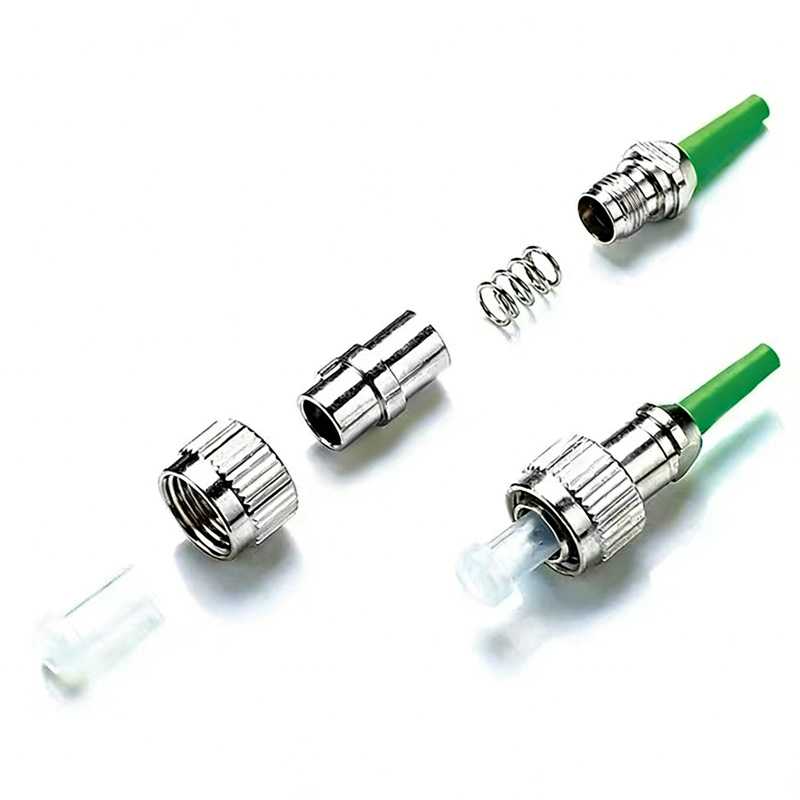
描述
Key Features
-
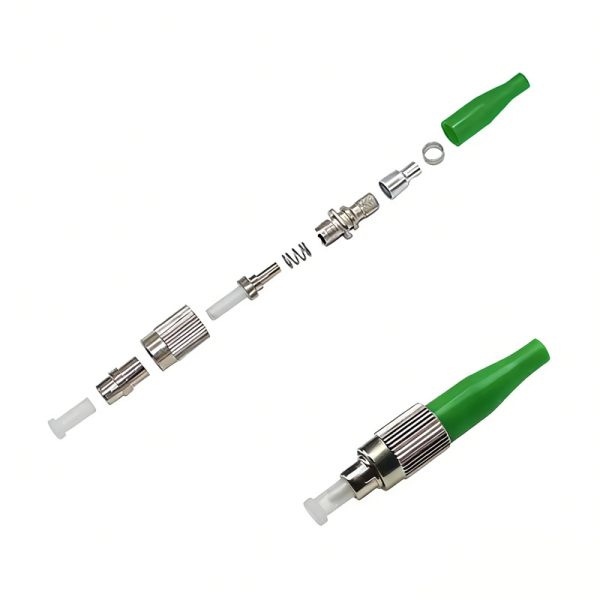
APC (Angled Physical Contact) Ferrule: Minimizes back-reflection with typical return loss ≥ 60 dB for single-mode fiber systems.
-
Non-Adjustable Fixed Boot (0.9 mm): Optimized for tight-buffer fiber cable assemblies.
-
Low Insertion Loss: Typical ≤ 0.20 – 0.30 dB across standard telecom wavelengths.
-
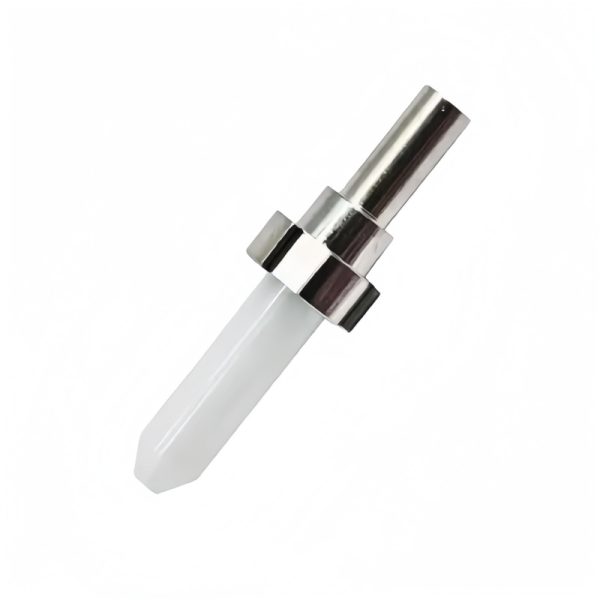
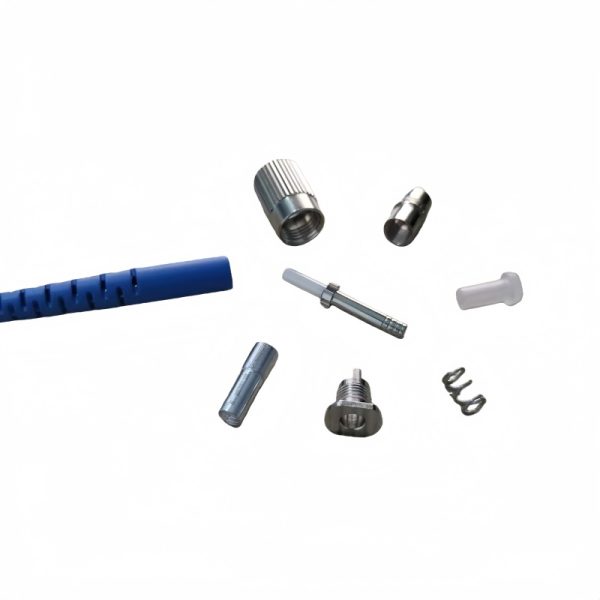
Precision Ceramic Ferrule: Zirconia ferrule ensures accurate fiber alignment and long-term repeatability.
-
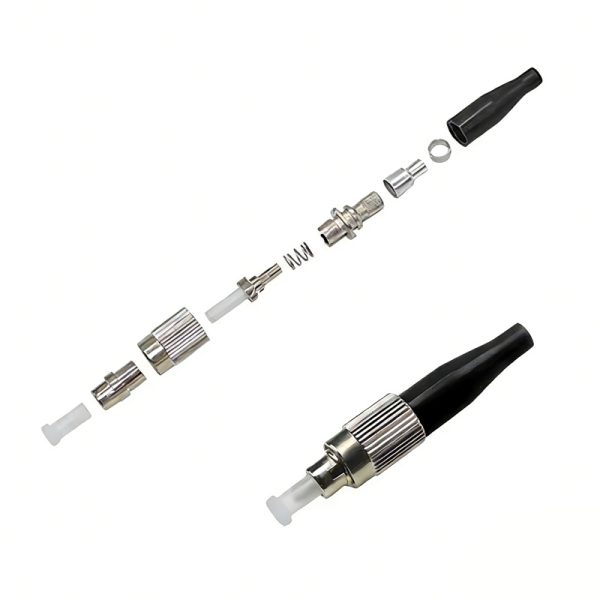
Robust Mechanical Design: Screw-on coupling and metal housing for secure connections and environmental resistance.
-
RoHS Compliant: Meets industry environmental and safety standards.
Typical Specifications
Optical Characteristics
| Parameter | Typical Value |
|---|---|
| Insertion Loss (APC) | ≤ 0.20 – 0.30 dB |
| Return Loss (APC) | ≥ 60 dB |
| Operating Wavelength | 1310 nm, 1550 nm |
| Fiber Mode | Single-mode (9/125 µm) |
| Ferrule Material | Ceramic (Zirconia) |
Values based on common FC APC 0.9 mm connectors in industry catalogs.
Environmental & Mechanical
| Feature | Specification |
|---|---|
| Boot Diameter | 0.9 mm fixed |
| Operating Temperature | -40 °C to +75 °C |
| Connector Type | Simplex FC with APC polish |
| Coupling Style | Threaded metal nut |
| Compliance | IEC & RoHS standards |
Representative of typical field-grade non-adjustable connectors.
Applications
-
Telecommunications Networks – reliable backbone and access layer connections.
-
FTTH / PON Installations – high return loss improves signal quality in subscriber links.
-
CATV & Broadband Systems – stable performance across long distance links.
-
LAN/WAN Infrastructure – patch panels, distribution frames and equipment terminations.
-
Laboratory & Test Systems – consistent optical performance for measurement setups.
Professional Q&A
Q1: What is the benefit of APC polish in an FC connector?
A1: APC stands for Angled Physical Contact, where the ferrule endface is polished at an angle (typically ~8°). This reduces back-reflection significantly, delivering high return loss (> 60 dB) and improving signal quality in single-mode systems.
Q2: Why use a non-adjustable 0.9 mm connector instead of an adjustable one?
A2: Non-adjustable connectors, like this 0.9 mm version, are pre-optimized at the factory for consistent dimensional accuracy and optical performance. They simplify installation, reduce field tuning time, and are ideal for mass-produced fiber assemblies.
Q3: Can this connector be used in demanding vibration environments?
A3: Yes. The threaded metal coupling and rigid construction help maintain stable connections even in environments with mechanical vibration and movement.

Reviews
There are no reviews yet.