
Descrição
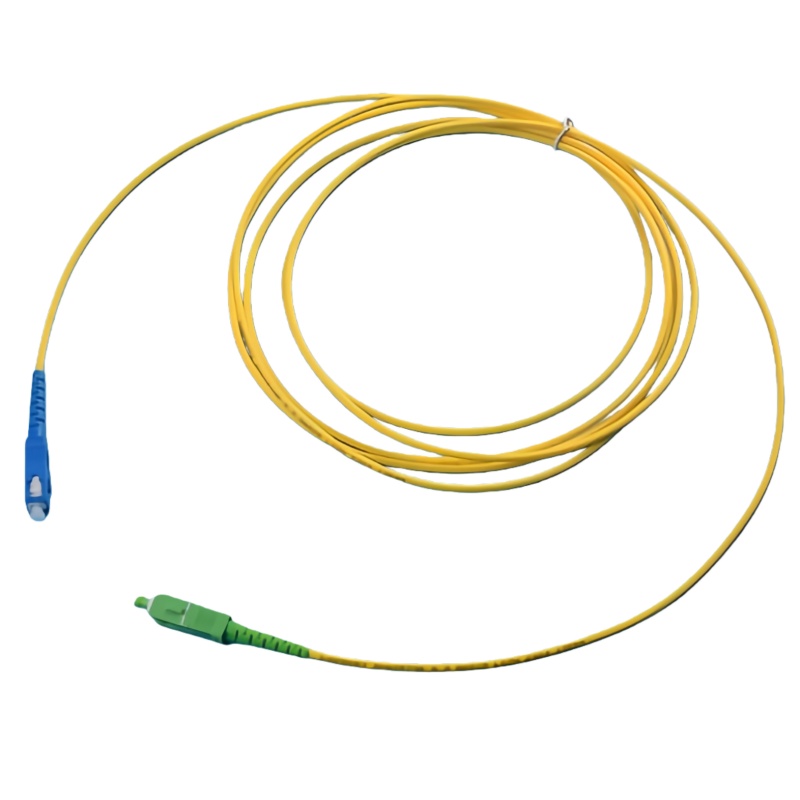
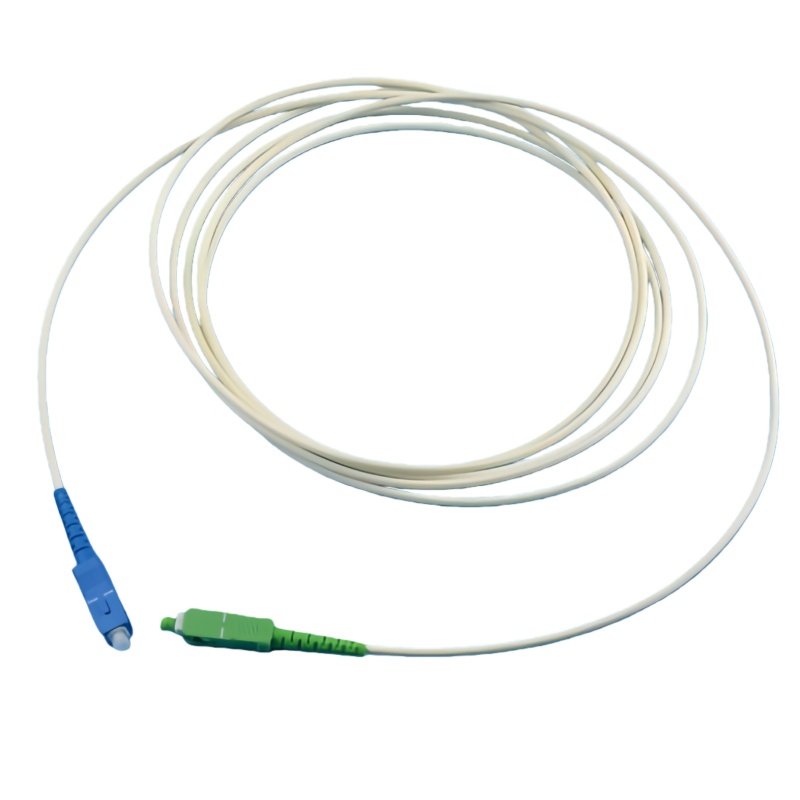
A lógica híbrida: O azul encontra o verde
-
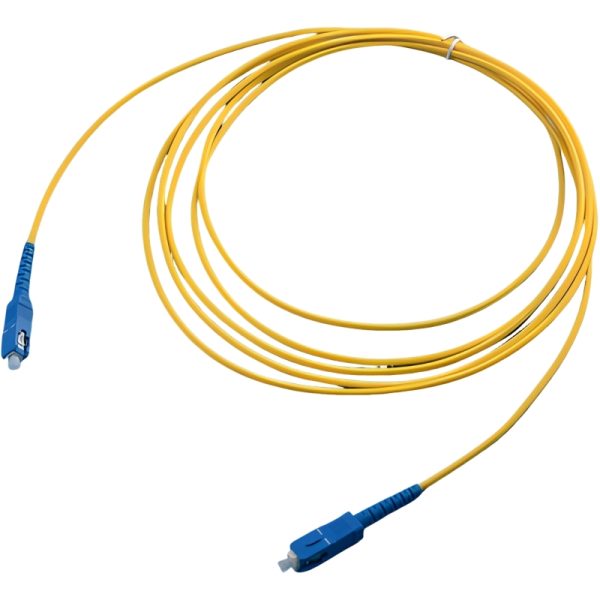
SC/UPC (azul): A extremidade “Ultra Physical Contact”. É o padrão para transmissão geral de dados digitais e LANs corporativas em que um polimento plano e de alta precisão é suficiente.
-
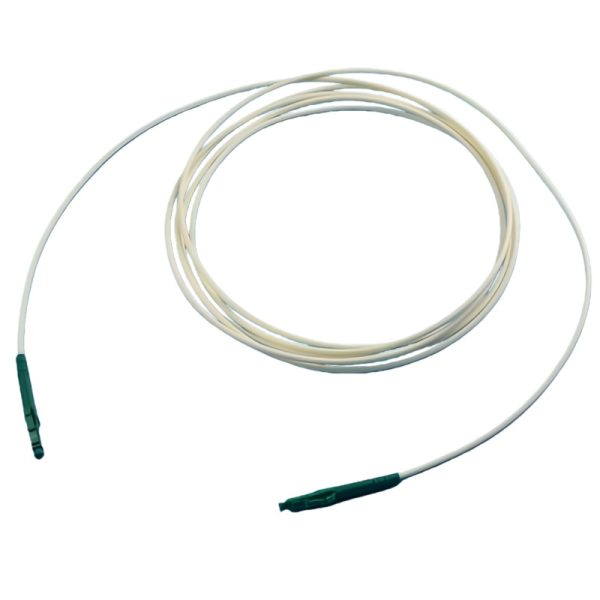
SC/APC (Verde): A extremidade “Angled Physical Contact” (contato físico angular). Com uma inclinação de 8 graus, é obrigatória para CATV, GPON e sistemas de alta taxa de bits para eliminar a reflexão traseira.
-
SM SX (Simplex de modo único): Um único fio de fibra OS2 de 9/125μm que suporta comunicação de longa distância com capacidade de largura de banda quase infinita.
Detalhamento do desempenho técnico
Para um link confiável, a transição entre UPC e APC deve ser perfeita. Nossos cabos atendem aos seguintes padrões de referência do setor para 2026:
| Especificação | Lado SC/UPC | Lado SC/APC | Benefício profissional |
| Cor do conector | Azul | Verde | Correspondência visual instantânea de portas |
| Perda de retorno | $\geq 50 \text{ dB}$ | $\geq 65 \text{ dB}$ | Protege os lasers da fonte contra ruídos |
| Perda de inserção | $\leq 0,3 \text{ dB}$ | $\leq 0,3 \text{ dB}$ | Atenuação mínima do sinal de luz |
| Grau de fibra | OS2 (9/125μm) | OS2 (9/125μm) | Compatível com G.652.D/G.657.A1 |
| Material da jaqueta | LSZH (amarelo) | LSZH (amarelo) | Seguro contra incêndios e pronto para o código de construção |
| Ciclos de acasalamento | $>1000$ vezes | $>1000$ vezes | Durável para remendos frequentes |
Por que esse jumper é essencial para as redes modernas
1. Interoperabilidade contínua
À medida que as redes ISP são atualizadas para XGS-PON ou 50G-PON, a “última milha” geralmente usa conectores APC. No entanto, o backbone existente ainda pode ser UPC. Esse cabo fornece o caminho direto para conectar esses dois mundos sem substituir painéis de patch inteiros.
2. Proteção contra reflexo traseiro
Ao usar o APC (Verde) em seu transmissor sensível (como um laser CATV ou um EDFA), você garante que a luz refletida seja direcionada para o revestimento da fibra, mantendo uma alta perda de retorno de $\geq 65\text{dB}$ mesmo que a outra extremidade seja um UPC padrão.
3. Projeto Simplex com eficiência de espaço
Para BiDi (bidirecional) Por que usar duas fibras quando uma é suficiente? O design Simplex (SX) reduz o volume de cabos nas bandejas e é mais fácil de gerenciar em gabinetes ODF (Optical Distribution Frame) apertados.
Perguntas e respostas de especialistas: Insights de campo
P: Posso conectar a extremidade azul em uma porta verde apenas para um teste rápido?
A: Não. Essa é a maneira mais rápida de arruinar uma conexão. Uma extremidade UPC é plana e uma porta APC é angular. Ao conectá-las, cria-se um “ponto de contato” físico que pode arranhar as duas ponteiras de cerâmica e, com certeza, causará um espaço de ar com grande perda de sinal.
P: Por que a perda de retorno é diferente em cada extremidade?
A: A perda de retorno é uma propriedade do polimento do conector. O ângulo de 8 graus no conector APC (Verde) é matematicamente projetada para reduzir a reflexão de forma mais eficaz do que a extremidade plana UPC (azul) e é por isso que ele tem uma classificação mais alta (65 dB vs. 50 dB).
P: Esse cabo é compatível com velocidades de 100G?
A: Com certeza. Os OS2 O núcleo de fibra monomodo é mais do que capaz de lidar com taxas de dados de 100G, 400G e até 800G, desde que seus transceptores e equipamentos de rede sejam classificados para essas velocidades.
P: Como faço para identificar esse cabo em um rack lotado?
A: Basta observar os conectores e os alojamentos. Uma extremidade será Azul e o outro será Verde. Esse código de cores é um padrão internacional para evitar que os técnicos façam conexões incorretas.

Comentários
Ainda não há comentários.