
Use an adjustable-key FC connector when the assembly process must rotate the connector key to a measured position, most often to align a polarization-maintaining fibre axis or control an APC ferrule-to-key relationship. Use a fixed-key construction when no rotational tuning step is required and the supplier can prove the finished assembly meets the specified optical, geometry and retention checks.
The commercial mistake is to treat “adjustable” as a higher grade. It is a mechanical feature that enables angular alignment before locking; it does not create a lower-loss connector by itself. The ferrule, spring, key, stop, crimp sleeve, boot and polishing process still determine the finished result. A buyer therefore needs to connect the choice to a stated tuning purpose, locking method and measured acceptance record.
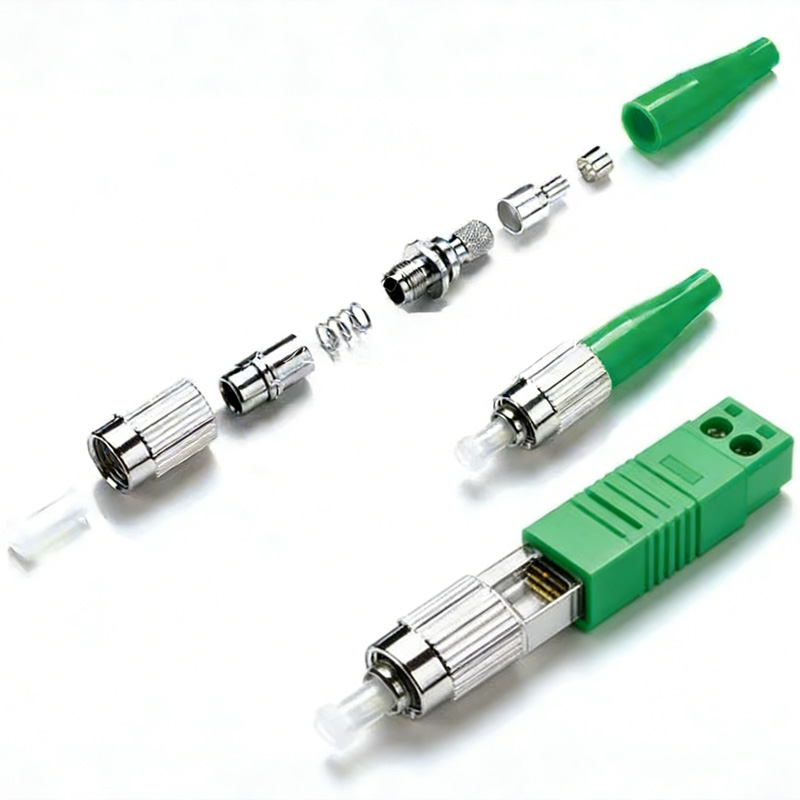
What Changes Between Adjustable and Non-Adjustable FC Designs?
The difference sits in the relationship between the keyed outer body and the ferrule assembly. An adjustable design permits controlled rotation before the position is locked. A fixed design removes that step. The table turns that mechanical distinction into purchase-order language.
| Decision point | Adjustable construction | Non-adjustable construction | Buyer evidence |
|---|---|---|---|
| Rotational position | Can be set during assembly before final locking | Set by the component geometry and assembly fixture | Work instruction showing how key position is established |
| Process steps | Adds tuning, position verification and lock control | Uses a shorter fixed assembly route | Approved process flow and operator checkpoints |
| Rework exposure | May allow correction before final lock | Usually requires replacement if the key relationship is wrong | Rework rule and traceability record |
| Lot repeatability | Depends on fixture discipline and locking consistency | Depends on tooling, moulded parts and ferrule seating | Capability data from completed assemblies |
| Best purchasing basis | Required tuning function plus acceptance result | Stable finished performance plus simpler assembly | Golden sample, drawing revision and test report |
How Should an OEM Decide Which FC Construction to Buy?
Start with the finished cable assembly and work backwards. A component can look correct on a parts list and still be wrong for the adhesive cure, polishing fixture or cable retention method used on the line.
Define the tuning reason
Write down what the adjustment is intended to control. If the answer is only “better performance,” the requirement is incomplete. State whether the factory tunes angular position, aligns a polarization-sensitive assembly, matches a keyed instrument interface or simply uses the adjustable body as its standard production platform.
Freeze the cable and boot interface
A 0.9 mm buffered pigtail, a 2.0 mm cord and a 3.0 mm cord do not use the same retention stack. The crimp sleeve, strength-member capture and boot exit must be reviewed as one system. Ask for a cross-section drawing rather than approving the connector body alone.
Approve the locking method
For an adjustable model, the position is only useful if it remains fixed after handling, curing, crimping and mating. The supplier should identify the locking feature, the inspection point and the disposition rule for movement found after final test.
Judge the completed assembly
Interface conformity is necessary, but it does not prove the workmanship of the terminated cord. Release the purchase against finished-assembly insertion loss, return loss, end-face inspection and mechanical retention records tied to the same lot.
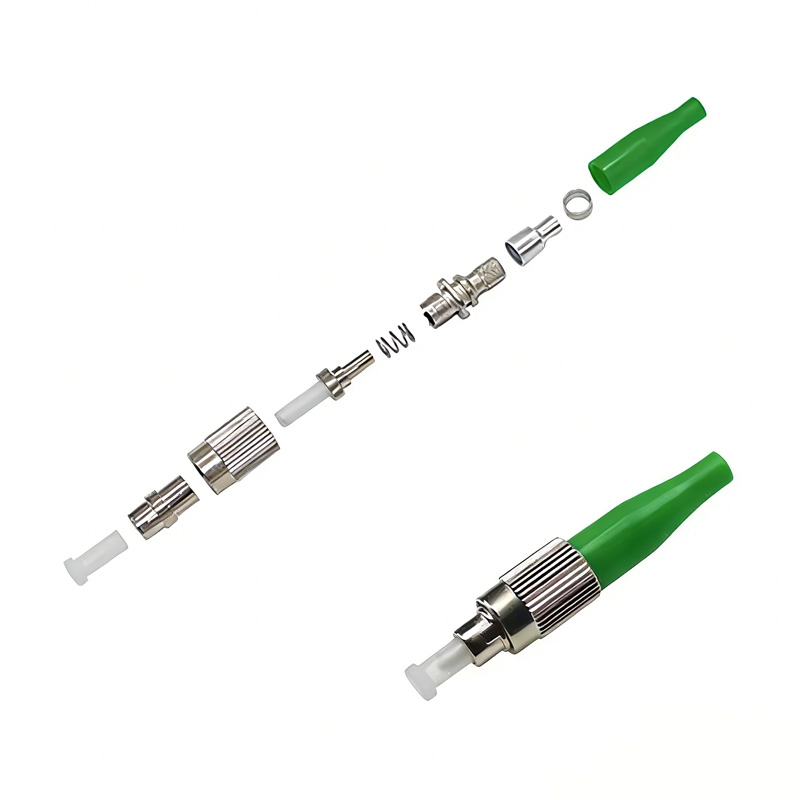
Where Do FC Component Orders Commonly Fail?
Most failures begin at an interface between two drawings or two process owners. The risk table below is designed for a sourcing review before samples are built.
| Arıza türü | Muhtemel neden | How to detect it | Purchase control |
|---|---|---|---|
| Key position shifts after test | Adjustment was not locked consistently | Repeat position check after handling and remating | Specify lock method and post-lock inspection |
| Cable pulls out of the rear body | Crimp stack does not match jacket and strength member | Retention test on finished cords | Approve cable cross-section and crimp tooling |
| Ferrule does not seat consistently | Spring stack or housing tolerance is wrong | Dimensional inspection and mating check | Control component revision and approved supplier |
| Good components produce poor optical results | Polish, cleaning or adhesive process is unstable | End-face images and optical test record | Buy against finished-assembly acceptance data |
| Replacement parts do not fit old tooling | Uncontrolled body or stop revision | First-article assembly in production fixtures | Require change notice before shipment |
Satın Alma Siparişini Destekleyecek Standartlar ve Kanıtlar
IEC 61754-13:2024 for the FC-PC connector family is the current FC interface reference. The third edition added intermateability provisions and revised plug-interface dimensions; Corrigendum 1 was incorporated in June 2025.
For a practical example of the feature’s intended use, Thorlabs describes an FC connector with a continuously adjustable key for PM-fibre axis alignment. This supports specifying the tuning function explicitly instead of treating adjustability as a generic performance grade.
The 2026 edition evaluates optical and mechanical degradation through repeated mating cycles and adds updated cleaning criteria and severity levels. See IEC 61300-2-2:2026 mating-durability test.
Corning explains that GR-326 is a performance specification for completed single-mode connector and jumper assemblies, not an isolated component claim. See Corning application note on GR-326.
FC Connector RFQ Checklist
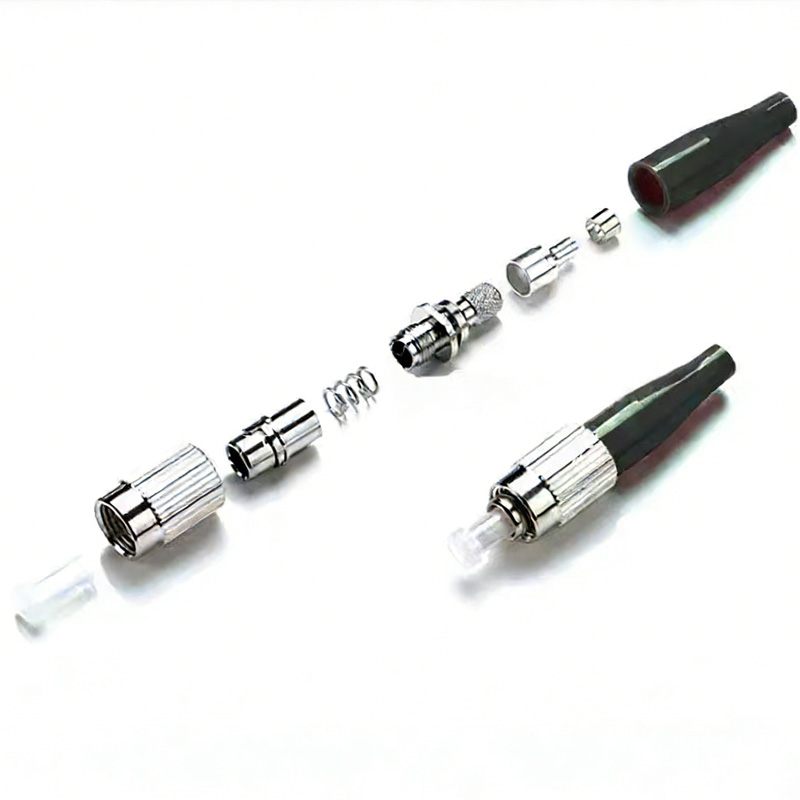
The RFQ should name the connector function, not merely the housing style. A useful package lets the supplier confirm the component set against the exact cable and lets the buyer verify the result on completed assemblies.
- FC polish and key orientation required by the mating interface
- Adjustable or non-adjustable body with the reason for the choice
- Cable outer diameter, buffer construction and strength-member material
- Crimp sleeve, boot style, adhesive and polish process to be used
- Finished-assembly optical, visual and retention records required for lot release
Projeye özel bir fiyat teklifi almak için Fenxi’nin FC connector components, LC connector range, SC connector components, ve connector ferrule material guide. Hedef pazarı, konektör arayüzlerini, fiber türünü, kablo yapısını, miktarları, çizim revizyonunu ve gerekli test kayıtlarını gönderin. Böylece verilen yanıtta, standart katalog seçenekleri ile onay gerektiren veya özel kalıplama gerektiren ürünler birbirinden ayrılabilir.