
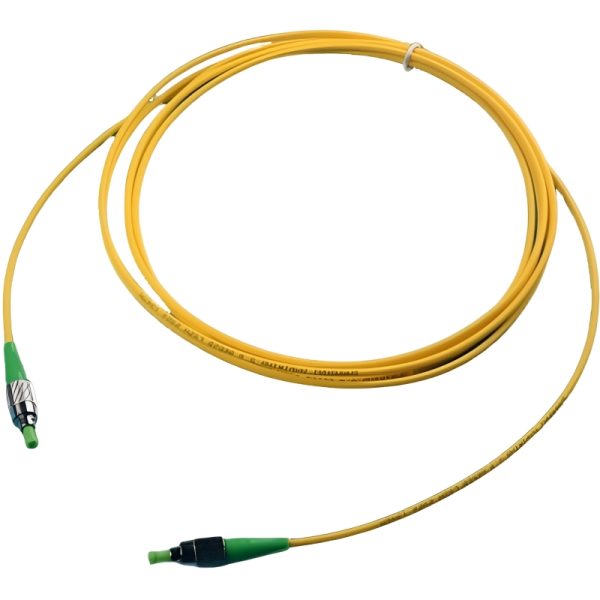
Açıklama
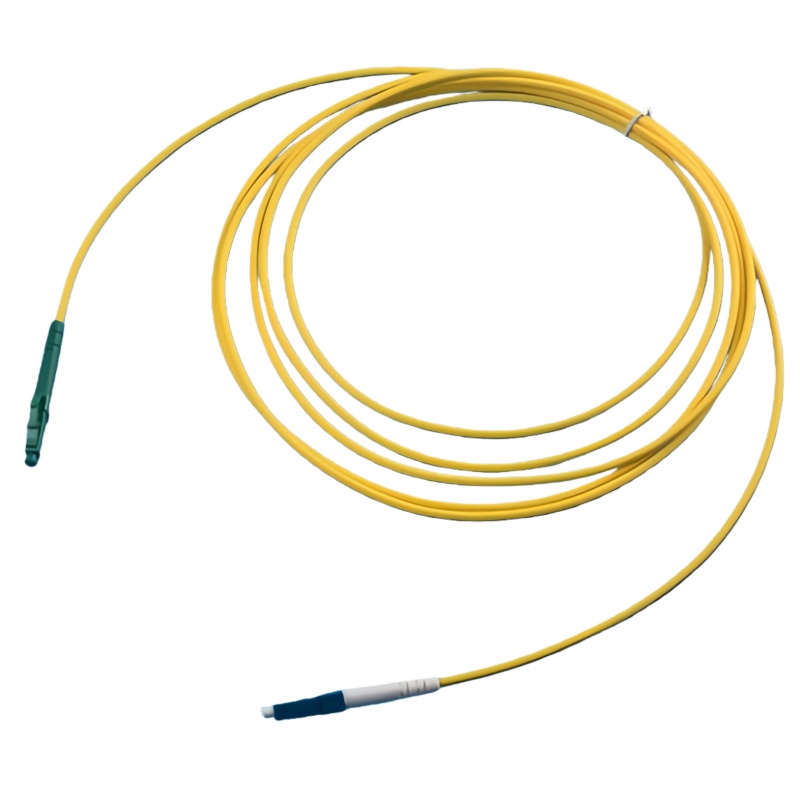
Bu Hibrit Yapılandırma Neden Hayat Kurtarıcı?
-
Lehçe Uyuşmazlıklarını Çözer: Bir APC konektörünü büyük bir sinyal kaybı olmadan bir UPC portuna takamazsınız. Bu kablo “dönüştürme” işlemini dahili olarak gerçekleştirerek sorunsuz bir geçiş sağlar.
-
Yüksek Yoğunluklu LC Ayak İzi: Her iki uçta da Small Form Factor (SFF) 1,25 mm yüksük kullanılarak kalabalık raflarda büyük miktarda yer tasarrufu sağlanır.
-
OS2 Tek Modlu Performans: Birinci sınıf G.652.D veya G.657.A1 fiber ile üretilmiştir ve uzun mesafelerde 10G, 25G ve hatta 100G veri hızlarını idare edebilmesini sağlar.
Teknik Performans Profili
Bu kablo iki farklı polisaj geometrisini birleştirdiğinden, fabrika hassasiyeti her şeydir. İşte nasıl ölçüldüğü:
| Parametre | Konektör A (LC/APC) | Konektör B (LC/UPC) | Avantaj |
| Renk Kodu | Yeşil | Mavi | Kolay görsel tanımlama |
| Uç Yüz Cilası | 8° Açılı | Ultra Fiziksel Temas | Farklı ekipman standartlarını köprüler |
| Geri Dönüş Kaybı | $\geq 60 \text{ dB}$ | $\geq 50 \text{ dB}$ | Lazer kaynağı için üstün koruma |
| Ekleme Kaybı | $\leq 0,3 \text{ dB}$ | $\leq 0,3 \text{ dB}$ | İhmal edilebilir güç düşüşü |
| Elyaf Tipi | Tek Mod (9/125μm) | Tek Mod (9/125μm) | Tutarlı sinyal hızı |
| Ceket | 2.0mm LSZH | 2.0mm LSZH | Yangına karşı güvenli ve son derece esnek |
Stratejik Kullanım Örnekleri
1. Alıcı-Vericileri ODF'lere Bağlama
Birçok modern yüksek güçlü alıcı-verici bir APC Dahili lazeri geri yansımadan korumak için bağlantı. Ancak, birçok kurumsal sınıf yama paneli hala UPC. Bu kablo, bu bağlantı için “eksik halka ”dır.
2. Test ve Ölçüm
Teknisyenler bu atlama telini genellikle APC tabanlı OTDR'leri (Optik Zaman Tanımlı Reflektometreler) büyük adaptörlere ihtiyaç duymadan test ve sorun giderme amacıyla UPC tabanlı ağlara bağlamak için kullanır.
3. GPON ve XGS-PON Dağıtımları
PON ağları geliştikçe, karışık ortamlar yaygınlaşır. Güvenilir bir LC/APC-LC/UPC jumper'a sahip olmak, yeni nesil ONT'leri eski dağıtım çerçevelerine bağlayabilmenizi sağlar.
Uzman Soru-Cevapları: Saha SSS
S: Kabloyu çevirip her iki yönde de kullanabilir miyim?
A: Teknik olarak evet, fiber ışığın hangi yöne gittiğini önemsemez. Ancak, siz gerekir Yeşil ucun her zaman bir Yeşil bağlantı noktasına ve Mavi ucun bir Mavi bağlantı noktasına gittiğinden emin olun. Renk eşleştirme fiber optiğin altın kuralıdır.
S: LC/APC ucu neden daha yüksek bir Geri Dönüş Kaybına sahip?
A: APC yüksüğündeki 8 derecelik açı, ışığı kaynağa doğru geri yansıtmak yerine fiber kaplamanın içine yansıtır. İşte bu yüzden $\geq 60\text{dB}$, ile karşılaştırıldığında $\geq 50\text{dB}$ düz UPC ucunun.
S: 10G bağlantım için “Simplex” (SX) yeterli mi?
A: Kesinlikle. BiDi (Çift yönlü) SFP'ler kullanıyorsanız, göndermek ve almak için yalnızca bir fiber tele ihtiyacınız vardır. Bu “Simplex” kablo, işi yapmanın en yalın yoludur.
S: Bu hibrit kablo yerine yanlışlıkla bir APC-APC kablosu kullanırsam ne olur?
A: Bir APC (Yeşil) konektörü bir UPC (Mavi) bağlantı noktasına takarsanız, bir “Hava Boşluğu” yaşarsınız. Bu, yüksek ekleme kaybına neden olur (genellikle $>4\text{dB}$) ve ağ bağlantınızın başarısız olmasına veya paketlerin sürekli olarak düşmesine neden olabilir.

Yorumlar
Henüz yorum yok.