
IEC 61300-2-4 is a fibre-or-cable retention method, not a licence to pull an undefined connector until something breaks. A reproducible test identifies the exact cable construction, device attachment, grip points, load direction, conditioning, severity, pass/fail rule and post-test optical check. Without those inputs, results cannot be compared across factories, cable sizes or connector bodies.
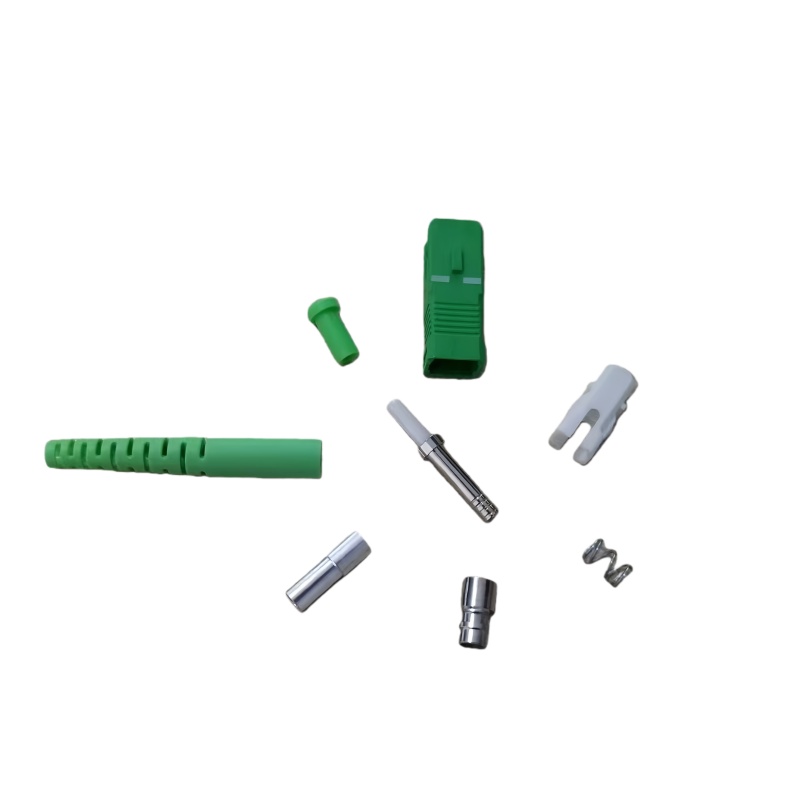
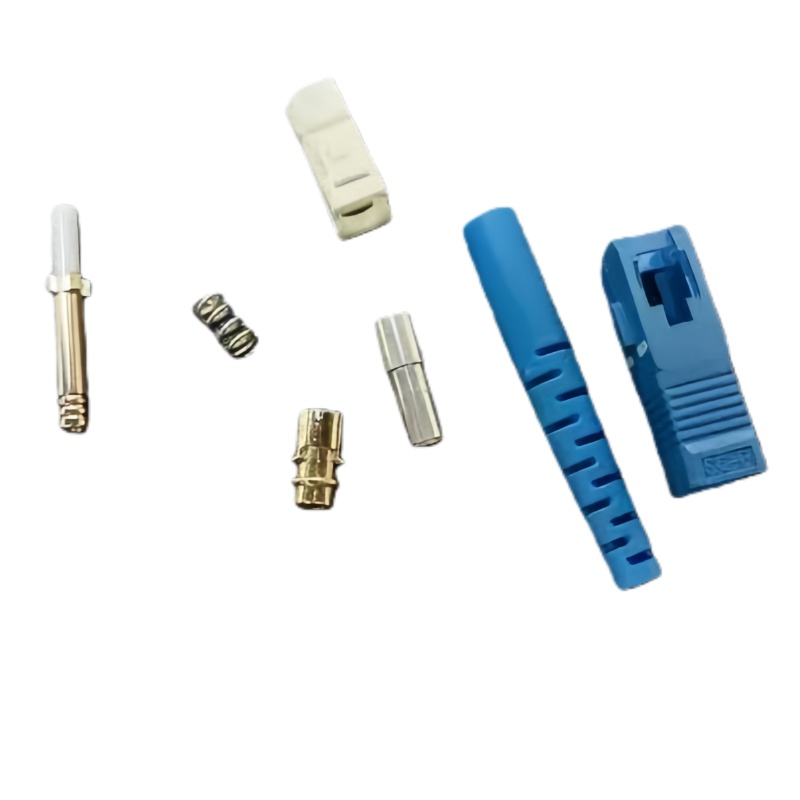
The rear of a connector contains several load paths. The crimp may capture aramid yarn, the jacket may be supported by a sleeve, and a buffered pigtail may have no outer jacket at all. The IEC method can be applied to retention or attachment of fibre, cord or cable in a device or enclosure; it does not make every connector-and-cable build equivalent. A qualification test challenges the design, while a production sampling test watches for drift. Procurement should state which one it expects and should not transfer a severity from an unrelated assembly.
What Must Be Defined Before a Retention Test Starts?
The method should be reproducible at the supplier and buyer. A single force value is not enough to reproduce the setup.
| Test input | Why it changes the result | Specification entry | Record to retain |
|---|---|---|---|
| Cable construction | Jacket, buffer and strength members carry load differently | Exact cable drawing and approved material revision | Cable lot and cross-section photo |
| Grip location | Clamping the wrong layer can test the fixture rather than the crimp | Distance and grip surfaces shown on a sketch | Setup photograph |
| Load profile | Rate, direction, dwell and cycling change the failure mechanism | Project method or agreed standard reference | Machine program and force trace |
| Failure definition | Slip, breakage and optical change are different outcomes | Visible movement, damage and optical criteria | Failure code and post-test images |
| Sample selection | Convenient samples hide tooling or operator variation | Random selection across lines, cavities and shifts | Lot map and sample IDs |
How Should Qualification and Lot Tests Differ?
Qualification explores the design margin and likely failure mode. Lot testing confirms that a previously approved process stayed under control. Combining the two creates either an expensive production test or a weak qualification.
Use qualification to challenge the design
Condition samples, include cable-tolerance extremes and inspect the assembly after loading. Record where each sample failed. A connector body that never moves while the fibre or jacket fails elsewhere has passed a different question from a crimp that slips.
Use lot sampling to detect drift
Select samples across production time, tooling and operators. The sampling rule and switching action should be agreed before inspection. A supplier should not choose extra favourable samples after a failure is observed.
Measure optical condition before and after
A rear assembly may look intact while stress has reached the fibre. Record optical performance before the mechanical test and again after the specified recovery period, using the same reference setup.
Keep failed samples
Photographs are useful, but a retained failure can be sectioned to show yarn capture, adhesive position and jacket damage. Define retention time and ownership so the evidence remains available during corrective action.
Lot-Release Record for Crimp Retention
The record should let a buyer reconstruct who made the sample, what was tested and why the lot passed. Use the fields below as a minimum structure, then add the project-specific limit.
| Record field | Required content | Motivo | Escalation trigger |
|---|---|---|---|
| Product identity | Connector, cable, boot, crimp and drawing revision | Prevents results being applied to a different build | Any unapproved component revision |
| Lot identity | Production date, line, tool and material lots | Supports containment | Missing link between sample and shipment |
| Test setup | Machine, calibration, grips and program | Makes the result reproducible | Expired calibration or altered program |
| Results | Trace, failure mode, optical before/after and photographs | Separates movement from hidden optical damage | Any sample outside the agreed rule |
| Disposition | Acceptance, tightened inspection, rework or quarantine | Stops informal retesting from replacing the plan | Retest without approved disposition |
Normas y pruebas que respaldan la orden de compra
The directly relevant method is IEC 61300-2-4:2019+AMD1:2020, which addresses retention or attachment of fibre, cord or cable in a fibre-optic device or enclosure under tensile load. The consolidated edition includes clarified procedures and severities and remains listed by IEC as valid.
Corning explains that GR-326 is a performance specification for completed single-mode connector and jumper assemblies, not an isolated component claim. See Corning application note on GR-326.
The 2026 edition defines AQL-indexed lot-by-lot attribute-sampling schemes and switching rules. See ISO 2859-1:2026 AQL sampling standard.
Sample Specification Language
Write the requirement as a method and a decision rule: identify the assembly, test setup, conditioning, sample selection, failure definitions, optical checks and lot action. Insert numerical limits only from the buyer’s approved design standard or validated qualification report.
- Do not copy a force limit from a different cable construction
- Require traceable samples from the shipment lot
- Record mechanical and optical results together
- Define the action after one or more failures before testing begins
- Require notification before any crimp, boot, cable or tooling change
Para obtener una cotización específica para tu proyecto, consulta la página de Fenxi fiber patch cord range, end-face inspection guide, Guía sobre la geometría de la cara frontal de los conectores, y adapter cleaning procedure. Envía el mercado de destino, las interfaces de conexión, el tipo de fibra, la estructura del cable, las cantidades, la revisión del plano y los registros de pruebas requeridos. De esta manera, la respuesta podrá distinguir entre las opciones estándar del catálogo y los artículos que requieran confirmación o herramientas personalizadas.