
Ceramic alignment sleeves are normally selected where precise repeated alignment is the primary requirement, while phosphor bronze sleeves can suit specified multimode or general-purpose applications when the connector and adapter design has been qualified as a system. Material alone does not establish performance; the finished adapter must meet the optical and mechanical requirements of the intended mating pair.
An adapter sleeve centres two ferrules, but the connection also depends on ferrule geometry, sleeve split and retention, adapter housing, contamination and mating force. Buyers should avoid a blanket rule that one material is always superior. Instead, identify the connector family, fibre type, environment and qualification record, then keep the approved sleeve material under change control.
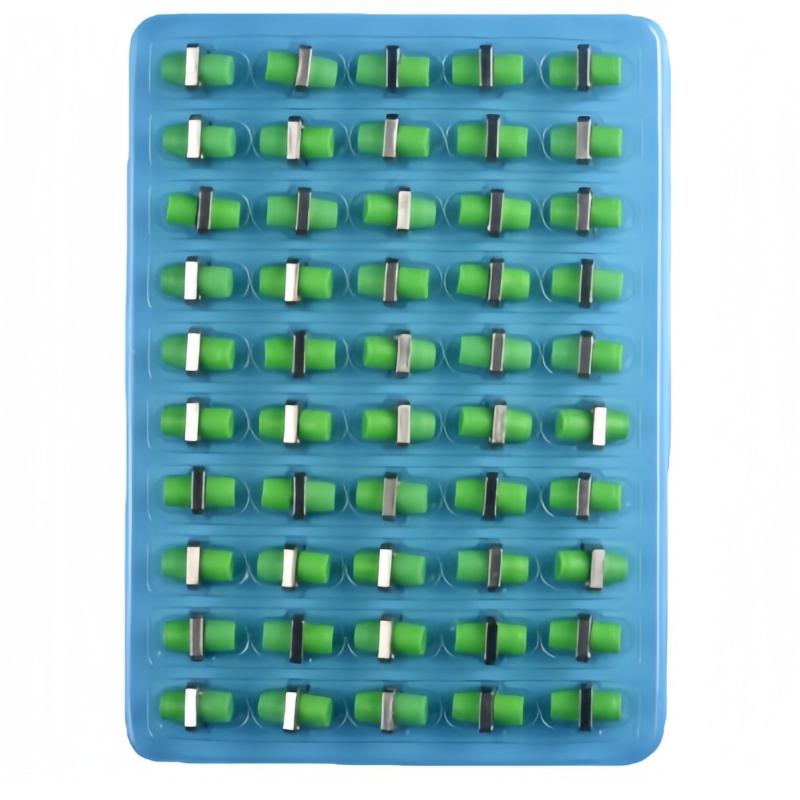
How Do Ceramic and Phosphor Bronze Sleeves Differ?
The useful comparison is the behaviour of the qualified adapter, not an isolated material slogan. The sleeve has to centre the intended ferrules throughout mating, cleaning and service.
| Decision factor | Ceramic sleeve | Phosphor bronze sleeve | Evidence to request |
|---|---|---|---|
| Alignment duty | Common choice for demanding single-mode alignment | May be used in qualified designs with different alignment needs | Finished-adapter optical test with the intended ferrules |
| Elastic behaviour | Relies on controlled ceramic geometry and split design | Metal spring behaviour depends on alloy and forming process | Sleeve drawing, material declaration and dimensional report |
| Wear and remating | Performance depends on surface, cleanliness and mating cycle | Performance depends on plating or finish, spring retention and wear | Before/after optical data from the agreed durability test |
| Contamination response | Particles can disturb seating and alignment | Particles can also score or prevent consistent seating | Inspection and cleaning work instruction |
| Substitution risk | Different ceramic grades or suppliers need review | Alloy, temper and forming changes need review | Change-notification clause and first-article reapproval |
What Should an Adapter Qualification Include?
Qualify the adapter with reference plugs that represent the application. A sleeve report alone cannot show housing retention, ferrule seating or optical repeatability.
Use the intended connector family
Test LC, SC or FC adapters with the matching plug geometry and polish. Hybrid adapters require both sides to be identified. Do not apply results from one ferrule diameter or housing family to another.
Measure repeated connections
Record insertion loss across remating cycles and inspect the sleeve and end faces at defined stages. Clean only according to the test plan so an operator cannot erase evidence whenever a result drifts.
Challenge the housing
Check sleeve retention, latch or thread engagement, flange fit and panel mounting. An accurately made sleeve cannot compensate for an adapter body that moves in the panel or fails to seat the plug.
Freeze the approved construction
Material, sleeve supplier, split geometry and housing tooling belong on the controlled bill of materials. Require a change notice before any substitution, even when the external colour and catalogue code stay the same.
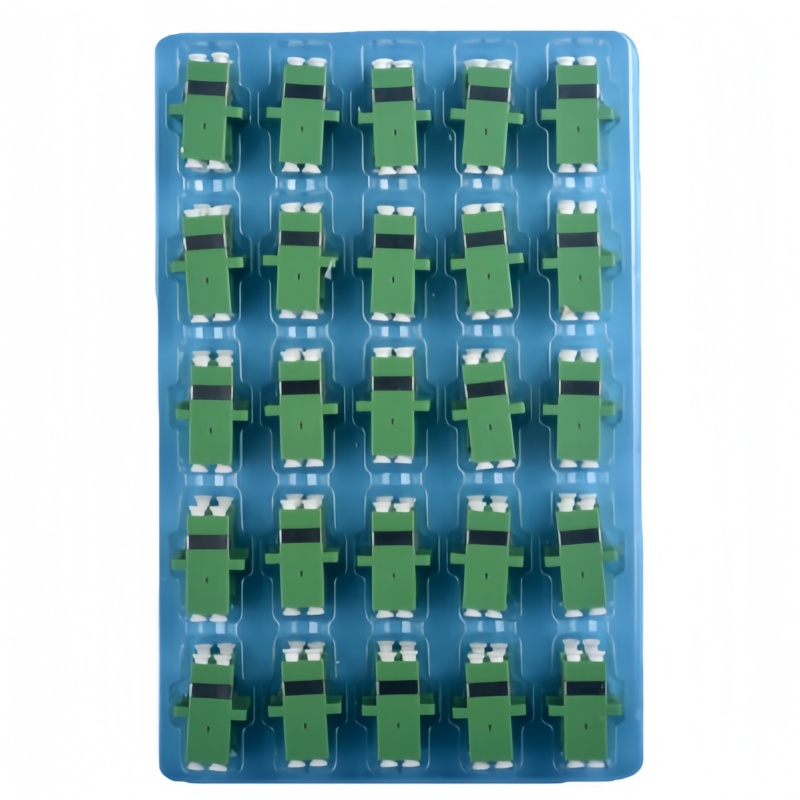
Adapter Sleeve Risk Register
Use a risk register during supplier selection so the qualification plan covers both optical alignment and maintainability.
| Risk | Mechanism | Detection | Control |
|---|---|---|---|
| Intermittent loss after remating | Sleeve no longer centres ferrules consistently | Repeat optical measurement with inspected reference plugs | Durability test and approved sleeve construction |
| Good lab result, poor field result | Reference plugs do not represent production connectors | Test with application-representative plugs | Reference-plug definition on the method |
| Debris returns after cleaning | Sleeve or housing traps contamination | Inspect both plug faces and adapter interior | Defined tools and replacement rule |
| Adapter moves in panel | Mounting footprint or latch is wrong | Panel-fit and pull check | Controlled cutout and mounting style |
| Performance changes after supplier switch | Material or forming process changed | Compare first article to retained sample | Formal change notice and requalification |
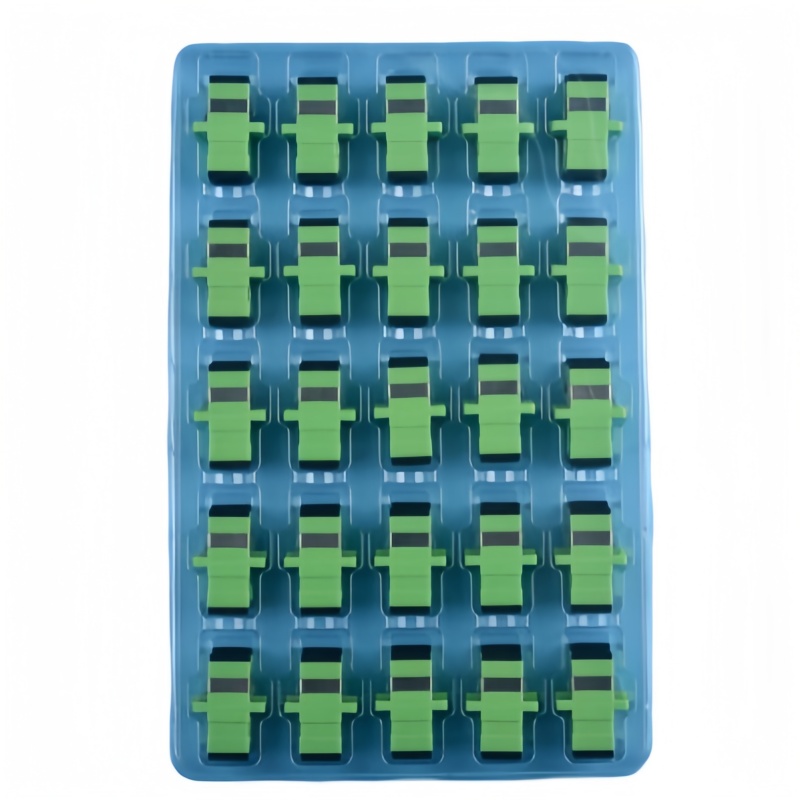
Satın Alma Siparişini Destekleyecek Standartlar ve Kanıtlar
Bu IEC yayını, LC konektör ailesi için standart arayüz boyutlarını tanımlamaktadır. Bkz. IEC 61754-20 LC arayüz standardı.
The 2026 edition evaluates optical and mechanical degradation through repeated mating cycles and adds updated cleaning criteria and severity levels. See IEC 61300-2-2:2026 mating-durability test.
2022 baskısı, uç yüzeyindeki kalıntıları, çizikleri ve kusurları ele almakta ve görsel incelemenin optik uygunluk değerlendirmesinin yerini almadığını belirtmektedir. Bkz. IEC 61300-3-35 konektör denetimi.
Buyer Recommendation
Specify the sleeve material that has been qualified for the connector family and application, then buy against finished-adapter optical, durability, inspection and panel-fit evidence. Do not accept an undocumented material substitution as an equivalent part.
- Identify connector family, fibre type and polish
- State sleeve material on the controlled bill of materials
- Define reference plugs and optical method
- Include remating, inspection and housing-retention checks
- Require notification and reapproval for material or sleeve-source changes
Projeye özel bir fiyat teklifi almak için Fenxi’nin fiber optik adaptör serisi, LC UPC duplex adapter, SC APC single-mode adapter, ve fiber adapter selection guide. Hedef pazarı, konektör arayüzlerini, fiber türünü, kablo yapısını, miktarları, çizim revizyonunu ve gerekli test kayıtlarını gönderin. Böylece verilen yanıtta, standart katalog seçenekleri ile onay gerektiren veya özel kalıplama gerektiren ürünler birbirinden ayrılabilir.