
Every FTTH contractor has a story about the same symptom: an OTDR trace that looks clean at 1310 nm, then shows an extra decibel or two at 1550 nm or 1625 nm once the drop cable is dressed around a wall corner. Nine times out of ten, the fiber grade is the cause. Standard single-mode fiber and bend-insensitive single-mode fiber look identical on a data sheet, yet they behave very differently inside a compact terminal, a wall outlet, or a crowded splice tray. This guide compares G.652.D and G.657 fiber across bend radius, compatibility and cost, then maps each grade to the ODN segments where it earns its keep.
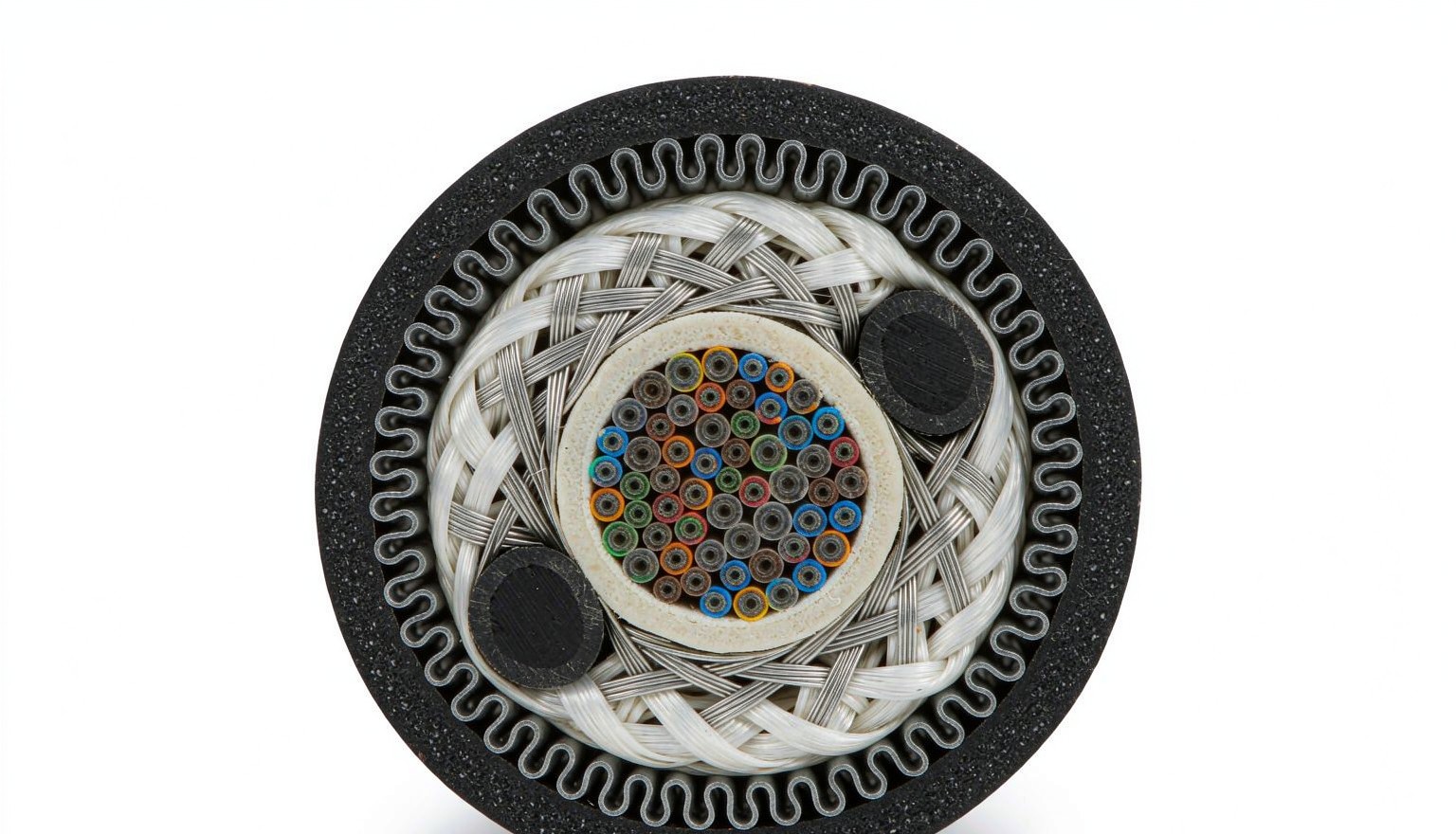
Why Macro-Bend Loss Hides Until 1550 nm
When a single-mode fiber is bent, part of the guided mode leaks out of the core and cladding. The leakage grows steeply with tighter radii, and it grows even faster at longer wavelengths. A loop that adds almost nothing at 1310 nm can add measurable attenuation at 1550 nm and become obvious at 1625 nm, which is why many bend problems only surface when the OTDR test wavelength moves up or when an L-band monitoring channel is switched on.
The ITU-T reference document on G.657 notes that a standard G.652 fiber coiled at a 15 mm radius can show macrobend losses of several decibels per 10 turns at 1625 nm. That is not a corner case; it is exactly the radius a drop cable takes when it is routed through a compact access terminal or looped behind an ONT. Installers who dress fibers the same way they dress copper end up with links that pass daytime spot checks and then drift out of specification in the field.
What G.652.D and G.657 Actually Specify
Le ITU-T G.652 recommendation defines the workhorse standard single-mode fiber used in metro, backbone and access networks. G.652.D, the current low-water-peak subcategory, is what most outdoor cables, feeder trunks and generic patch cords contain. Its bend behavior is specified at generous radii: a 30 mm design radius is the practical planning figure, and the standard still allows a measurable loss budget at 1625 nm when the fiber is coiled tightly.
UIT-T G.657 was written for the access network, where tight routing is the norm. It splits into Category A fibers, which are a strict subset of G.652.D and usable wherever G.652.D is specified, and Category B fibers, which tolerate the smallest radii but relax some transmission attributes for short reach. The table below summarizes the practical differences.
| Paramètres | G.652.D | G.657.A1 | G.657.A2 | G.657.B3 |
|---|---|---|---|---|
| Minimum design radius | 30 mm | 10 mm | 7.5 mm | 5 mm |
| Macrobend limit at 1550 nm | ≤0.1 dB / 100 turns at 30 mm | ≤0.75 dB / 1 turn at 10 mm | ≤0.5 dB / 1 turn at 7.5 mm | ≤0.15 dB / 1 turn at 5 mm |
| Macrobend limit at 1625 nm | ≤0.1 dB / 100 turns at 30 mm | ≤1.5 dB / 1 turn at 10 mm | ≤1.0 dB / 1 turn at 7.5 mm | ≤0.45 dB / 1 turn at 5 mm |
| G.652.D compliance | Base de référence | Fully compliant | Fully compliant | Compatible, not compliant |
| Typical reach | Any | Any | Any | Below ~1000 m |
Two consequences follow from this table. First, G.657.A1 and A2 can replace G.652.D anywhere with no optical penalty, so the only reason to keep buying standard fiber for indoor routing is price. Second, B3 fibers trade some mode field diameter and dispersion conformity for their 5 mm radius, which matters for splicing and is covered below.
Matching Fiber Grade to Each ODN Segment
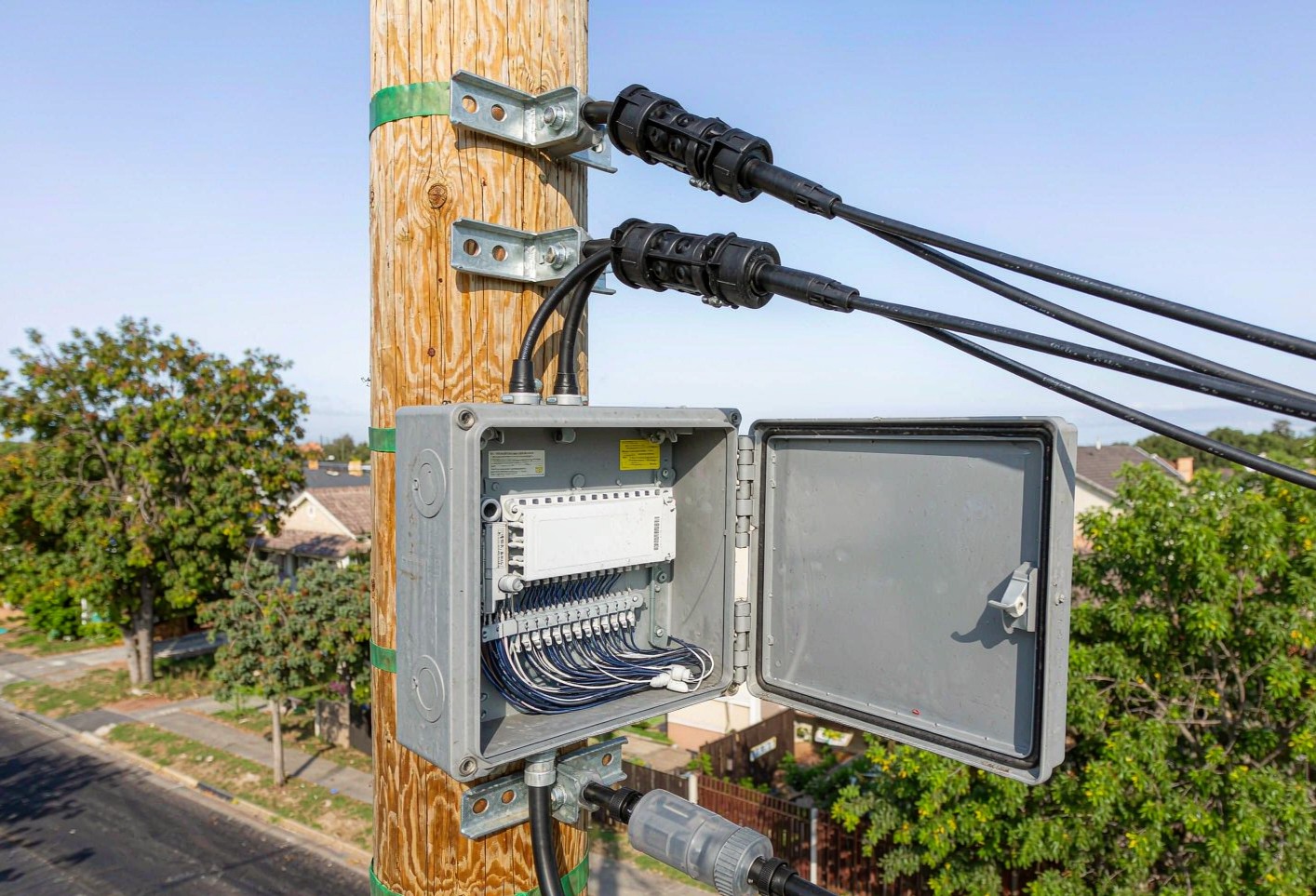
A GPON or XGS-PON outside plant is not one homogeneous run. Between the central office and the ONT, the fiber passes through feeder cable, distribution cable, a splitter stage, drop cable and finally in-building wiring, and each segment faces different routing conditions. Specifying one grade everywhere either wastes money on the long runs or invites bend loss in the last 50 meters.
| ODN segment | Typical cable | Recommended grade | Rationale |
|---|---|---|---|
| Feeder / backbone | Outdoor loose tube or armored | G.652.D | Controlled duct or aerial routing; bend radius easy to hold; cost dominates at long lengths |
| Distribution | Outdoor or indoor/outdoor cable to the splitter stage | G.652.D or G.657.A1 | A1 helps in compact cabinets and dense splitter enclosures |
| Drop cable | Flat drop or round indoor/outdoor | G.657.A2 | Corner turns, clamps and wall entries routinely go below 10 mm radius |
| In-building wiring | Indoor simplex or duplex, LSZH jacket | G.657.A2 | Wall outlets, risers and MDU corridors favor tighter handling and easier rework |
| ONT / FTTR home runs | Small-diameter indoor cord | G.657.B3 where routing is extreme | 5 mm radius behind furniture and inside narrow raceways; keep runs short |
This split keeps spend where it matters. On a typical greenfield build, the feeder and distribution kilometers stay on G.652.D pricing, while the two short bend-rich segments at each subscriber get G.657.A2. Premises cabling classes in TIA-568 do not mandate a fiber grade, so the grade decision belongs in your purchase specification, not in the installer’s hands on site.
Compatibility: Where Category A and Category B Differ
Category A fibers (A1, A2) are fully compliant with G.652.D: same mode field diameter window, same cutoff, same attenuation classes. You can splice a G.657.A2 pigtail to a G.652.D feeder and measure a normal 0.05 to 0.1 dB fusion splice loss. Connectors and adapters from both fibers are interchangeable, so mixed inventory carries no hidden penalty.
Category B3 relaxes mode field diameter, chromatic dispersion and polarization mode dispersion specifications to reach its 5 mm radius. It remains system compatible with G.652.D in access applications, but two effects deserve attention. Splice loss predictions between B3 and standard fiber carry more uncertainty, so a fusion splicer set up for one fiber may need program adjustment for the other. And because B3 is intended for distances under roughly a kilometer, it should stay at the customer end of the network rather than appear in a 20 km feeder bid.
One more environment deserves a note: central offices, where fibers carrying high optical power pass through dense trays. A tightly bent standard fiber can combine bend loss with local heating, a failure mode studied in IEC TR 62547 and available through the Boutique en ligne de l'IEC. Bend-insensitive fiber removes most of that risk in crowded ODF frames, which is why many operators now specify G.657.A1 as the default for central office interbay cabling.
Specifying Bend-Insensitive Patch Cords and Pigtails
Fiber grade is not only a cable purchase decision; it follows into every assembly you order. Pigtails sit in splice trays where 900 µm tight-buffered fibers loop around organizers at small radii, and patch cords route through cabinets, wall outlets and equipment racks where service loops get squeezed. A cord assembly built on G.657.A2 absorbs that handling without adding loss, which shows up directly in your link loss budget margin.
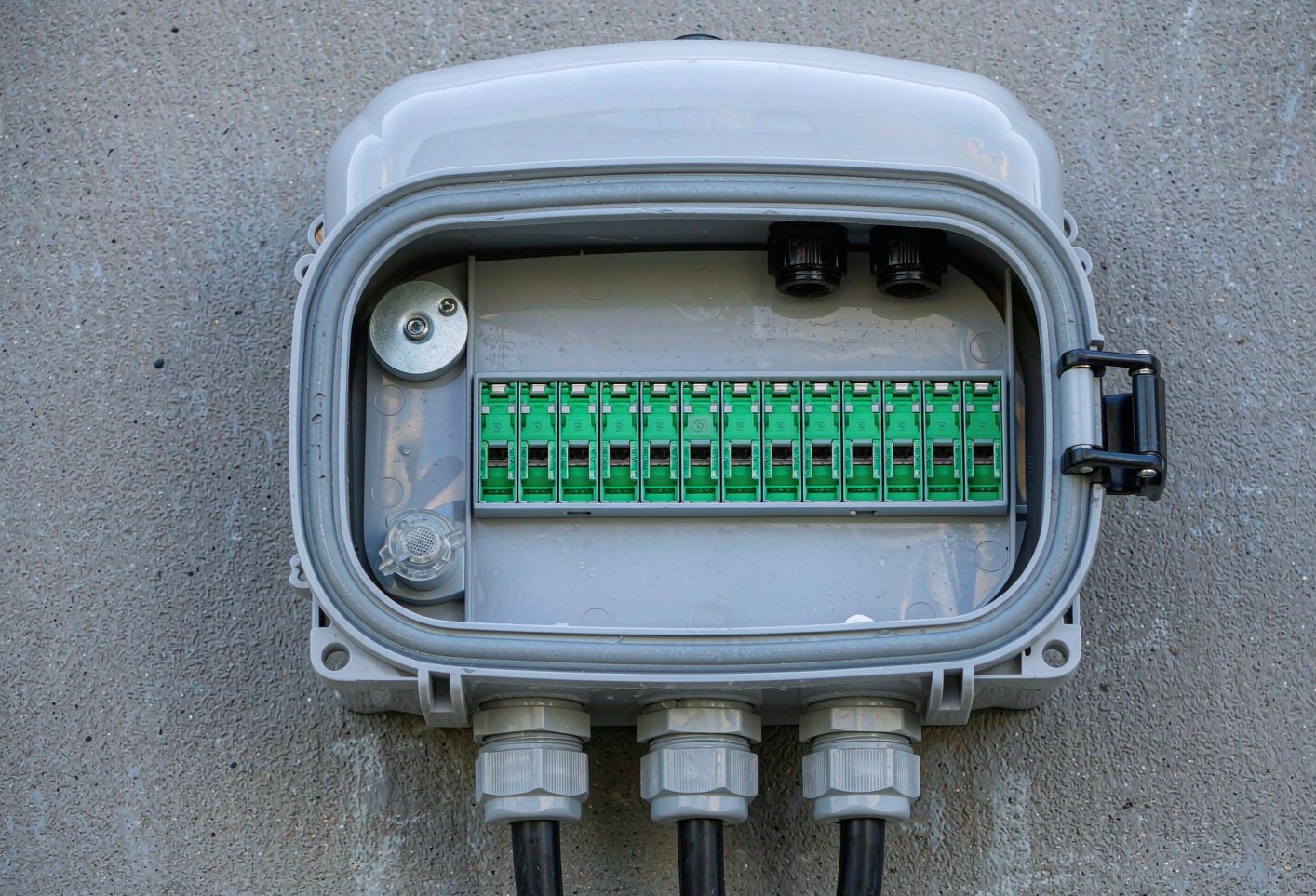
When writing the purchase order, name the fiber grade explicitly instead of accepting a generic “single-mode” line item. For tray work, order G.657.A2 0.9 mm pigtails with the connector polish your plant uses, and keep the 12-color code consistent with the 12-core fiber pigtail family already in your spares. For equipment-side connections, single-mode duplex cords in 2.0 mm jacket route more tightly than 3.0 mm and are the usual choice inside racks; the single-mode patch cord range covers G.657.A2 builds in both diameters. Where drops terminate in the field, a sealed boîte de terminaison de fibre with generous internal bend control plus G.657.A2 pigtails is the combination that survives installer handling.
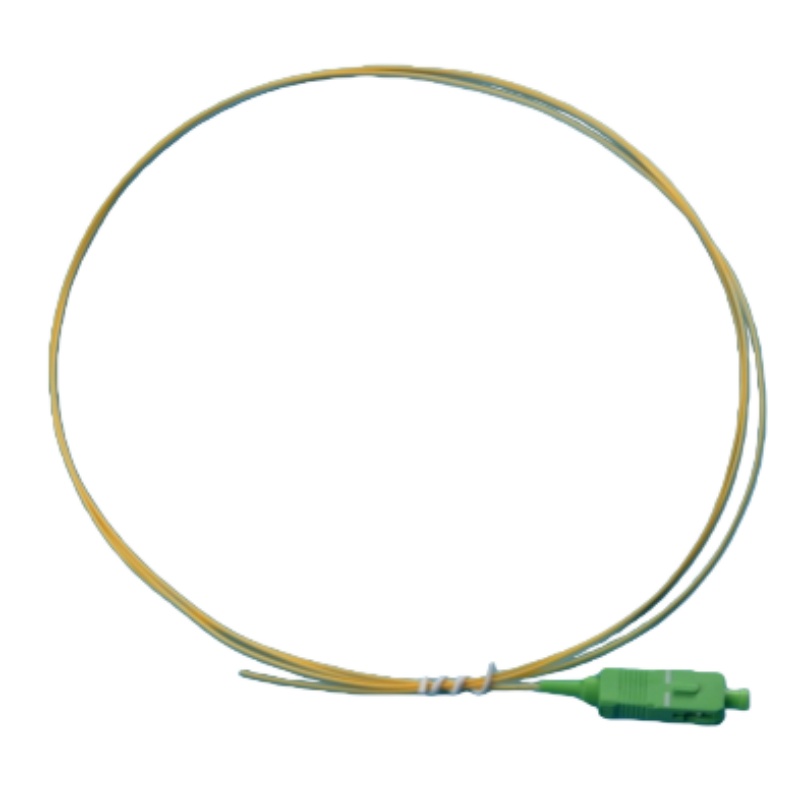
Our earlier pigtail selection guide covers buffer size, polish types and color codes in detail; add one line to that checklist, and insist on G.657.A2 fiber for anything that lives inside a cabinet, a tray or a wall outlet.
Pre-Order Procurement Checklist
Before releasing a fiber or assembly order, confirm each line below with your supplier. The five minutes spent here prevent the two most common failure modes: paying bend-insensitive prices for cable that never bends, and paying standard-fiber prices for cable that has to.
- Fiber grade per segment: state G.652.D for feeder and distribution, G.657.A2 for drop and in-building, B3 only for sub-kilometer extreme-routing runs.
- Subcategory on the certificate: require the fiber data sheet to name A1, A2 or B3 explicitly, not just “G.657”.
- Macrobend test data at 1625 nm: ask for the measured loss at the subcategory’s design radius, since that is the wavelength where field problems appear first.
- Assembly fiber, not just cable fiber: patch cords and pigtails should specify the grade on their own line item, with 0.9 mm buffer for tray work.
- Splice program coverage: if B3 is in the design, confirm the fusion splicer has a compatible program and re-test splice loss predictions on a sample batch.
- Bend control in enclosures: check that terminal boxes and trays carry internal radius guides; fiber grade is a safety net, not a substitute for routing discipline.
- Acceptance test wavelengths: test drops at 1550 nm or 1625 nm, not only 1310 nm, so macro-bend issues are caught before subscriber turn-up.
Send Fenxi your ODN segment list and routing constraints, and we will return a fiber grade recommendation for every position in the network, with matching patch cord and pigtail specifications, in one quote.