
1. Understanding the “Ultra” in SC UPC
Before diving into our top picks, we must clarify what makes a connector “High-Performance.”
The SC (Subscriber Connector) is a push-pull connector with a 2.5mm ferrule. The UPC (Ultra Physical Contact) refers to the polishing of that ferrule. Unlike the standard “PC” (Physical Contact) which may have a return loss of -30dB, the UPC is polished to a higher standard, typically achieving a Return Loss (RL) of -50dB or better.
In a data center, this means less light is reflected back toward the laser source, reducing signal noise and allowing for higher bit rates over longer distances.
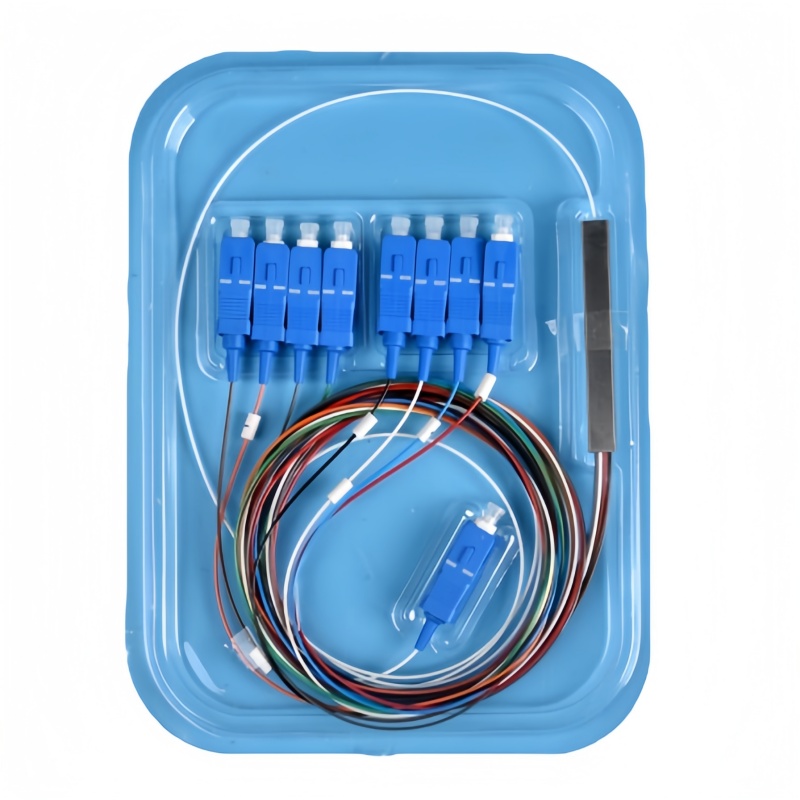
Table 1: Technical Comparison: SC PC vs. SC UPC vs. SC APC
| Feature | SC PC (Physical Contact) | SC UPC (Ultra Physical Contact) | SC APC (Angled Physical Contact) |
|---|---|---|---|
| Typical Return Loss | -35 dB | -50 dB to -55 dB | -65 dB or higher |
| Insertion Loss (Typical) | 0.3 dB | 0.2 dB | 0.3 dB |
| Housing Color | Beige/Black | Blue | Green |
| End-Face Geometry | Flat/Slightly Curved | Spherical/Convex | 8-Degree Angle |
| Best Application | Legacy Systems | Data Centers/Digital Telecom | CATV/Fiber-to-the-Home (FTTH) |
2. Selection Criteria: How We Ranked the Top 7
To help data center architects make informed decisions, we evaluated hundreds of connectors based on four “High-Performance” pillars:
- Insertion Loss (IL): The lower, the better. High-performance units must stay below 0.25dB.
- Durability: The ability to withstand 500+ matings without signal degradation.
- Ease of Termination: Whether they are factory-terminated or field-installable.
- Compliance: Adherence to TIA/EIA-568.3-D and IEC 61754-4 standards.
3. The Top 7 SC UPC Fiber Connectors for 2024
1. Corning SMF-28® Ultra Compatible SC UPC Series
Corning is the “gold standard” in fiber optics. Their SC UPC connectors are specifically designed to match the geometry of SMF-28 fiber, ensuring that the core alignment is near-perfect.
- Why it’s Top-Rated: Their zirconia ferrules are manufactured to sub-micron tolerances. For data centers running 100G backbone links over SC interfaces, Corning offers the most predictable performance.
2. CommScope SYSTIMAX® TeraSPEED SC Solutions
CommScope’s TeraSPEED line is engineered for zero water-peak performance. Their SC UPC connectors are built to handle the entire wavelength range from 1260 nm to 1625 nm.
- The Edge: They feature a patented “pre-radiused” ferrule, which means the physical contact is optimized even before the final polish, leading to extremely consistent Return Loss values across thousands of units.
3. Panduit OptiCam® Pre-Polished SC UPC
For data center technicians who need to terminate fiber on-site without the mess of epoxy and polishing films, Panduit is the leader.
- The Innovation: The OptiCam uses a visual overhead tool that glows when the fiber is correctly aligned. It’s a “Top 7” pick because it eliminates the human error usually associated with field-terminated connectors.
4. AFL FASTConnect® SC UPC (Tool-Less)
AFL’s FASTConnect series is a marvel of mechanical engineering. It features a factory-polished ferrule with a mechanical splice.
- Best For: Emergency repairs in the data center. If a trunk cable is severed, a FASTConnect SC UPC can be installed in under 30 seconds without needing a power source or a polishing kit.
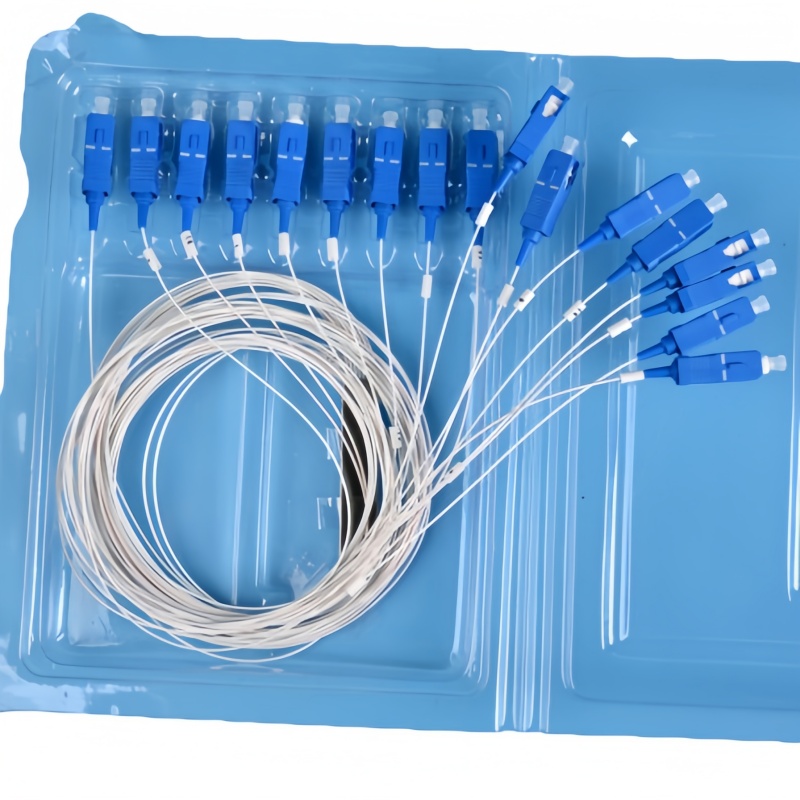
5. Senko Premium SC Series
Senko often flies under the radar compared to giants like Corning, but they are a favorite among high-precision lab environments.
- Technical Highlight: Their SC UPC connectors often exceed industry standards, frequently hitting -58dB Return Loss. They utilize a high-quality “one-piece” body design that minimizes the mechanical “play” inside the adapter.
6. Huber+Suhner MASTERLINE SC Connectors
This Swiss-engineered solution focuses on environmental stability. While data centers are climate-controlled, heat spikes can happen.
- The Difference: Their SC connectors use specialized thermal-stable plastics that don’t expand or contract significantly, preventing “piston effects” where the fiber moves inside the ferrule.
7. Belden FiberExpress (FX) SC Series
Belden is synonymous with reliability. Their FX series SC UPC connectors are designed specifically for high-density patching environments where cables are often pulled and moved.
- The Feature: They offer a robust strain-relief boot that is significantly more flexible than generic alternatives, preventing micro-bends at the point of entry.
4. Technical Deep-Dive: Why Insertion Loss (IL) is the “Silent Killer”
In a high-performance data center, you aren’t just connecting Point A to Point B. You are likely going through a patch panel, a cross-connect, and then another patch panel before reaching the server.
Each SC UPC connector adds a bit of “loss.” If you use generic connectors with a 0.5dB loss, and your link has four connections, you’ve lost 2.0dB of your signal. At 400G speeds, that can be the difference between a functional link and a “Link Down” error.
Table 2: Performance Metrics of Top 7 Manufacturers (Aggregated Data)
| Manufacturer | Avg. Insertion Loss (dB) | Return Loss (dB) | Mating Durability | Ferrule Material |
|---|---|---|---|---|
| Corning | 0.15 | -55 | 1000+ Cycles | Zirconia Ceramic |
| CommScope | 0.18 | -56 | 1000+ Cycles | Zirconia Ceramic |
| Panduit | 0.25 | -50 | 500+ Cycles | Zirconia Ceramic |
| AFL | 0.30 | -50 | 500+ Cycles | Zirconia Ceramic |
| Senko | 0.12 | -58 | 1500+ Cycles | Zirconia Ceramic |
| Huber+Suhner | 0.17 | -55 | 1000+ Cycles | Zirconia Ceramic |
| Belden | 0.20 | -53 | 750+ Cycles | Zirconia Ceramic |
5. Maintenance and Cleaning: The “Golden Rule”
You can buy the most expensive Senko or Corning connector, but if a single speck of dust (roughly 1 micron) lands on the center of the fiber core, the connector will fail.
The Physics of Contamination
When an SC UPC connector is mated, the two ferrules are pressed together with roughly 10,000 psi of pressure. If a dust particle is trapped between them, it is crushed into the glass, creating a permanent pit or scratch. This is why “Inspect before you connect” is the mantra of high-performance networking.
Professional Cleaning Checklist:
- Inspect: Use a digital fiber scope (400x magnification).
- Clean: Use a “One-Click” cleaner or a lint-free wipe with 99% Isopropyl Alcohol.
- Re-Inspect: Ensure the core is pristine.
- Connect: Mate the connector immediately after inspection.
6. Future Trends: SC UPC in the Age of 800G
As we look toward the 2025-2030 window, is the SC UPC going extinct? Not exactly. While LC Duplex and MPO/MTP dominate switch-to-switch links, SC UPC remains the standard for:
- Carrier Hand-offs: Most ISPs deliver their primary fiber feed into a data center via SC or FC connectors because of their mechanical robustness.
- Test Equipment: Almost all OTDRs (Optical Time Domain Reflectometers) use SC interfaces because they are more durable for the constant plugging and unplugging required during testing.
7. Professional Q&A
Q1: Can I connect an SC UPC (Blue) to an SC APC (Green)? A: Absolutely not. Connecting a UPC to an APC will cause an air gap between the two fibers, resulting in an insertion loss of 10dB or more and potentially damaging the fiber end-faces. Always match colors: Blue to Blue, Green to Green.
Q2: What is the maximum distance for a 10Gbps link using SC UPC connectors? A: On Single-Mode Fiber (OS2), you can reach up to 10km (10GBASE-LR) or even 40km (10GBASE-ER), provided your total link budget (including connector loss) stays within the SFP+ module’s specifications.
Q3: Why is Zirconia used for the ferrule instead of plastic or stainless steel? A: Zirconia ceramic has a thermal expansion coefficient very similar to glass. This ensures that as the data center warms up or cools down, the ferrule and the fiber expand at the same rate, preventing the physical contact from breaking.
Q4: Is field polishing still recommended for SC UPC connectors? A: In high-performance data centers, no. Factory-terminated pigtails or pre-polished connectors (like Panduit OptiCam) provide much higher consistency. Field polishing is prone to “undercutting” or “protrusion” issues that are difficult to measure without an interferometer.
8. Conclusion
Choosing the right SC UPC connector is about balancing the link budget with operational reality. For backbone mission-critical links, Corning or Senko provide the lowest loss. For rapid deployment and scalability, AFL or Panduit are the winners.
Regardless of the brand, the performance of your data center is only as good as the cleanliness of your physical layer. Invest in high-quality SC UPC connectors, but invest equally in the tools and training to keep them clean.