
A hybrid patch cord is the cleanest migration tool when two supported interfaces must be connected without an extra adapter. It is not a universal converter: both ends still need compatible fibre type, polish, optical direction and equipment support. The drawing should identify each end explicitly and the installed link should be tested as a complete channel.
FC, SC and ST ports often remain in instruments, access equipment or older distribution frames while new switches and panels use LC. A cord with different connectors at its ends reduces connection count, but it can also hide a polish mismatch or lead technicians to reverse the cable. Good migration documentation treats End A and End B as named interfaces, not interchangeable plugs.
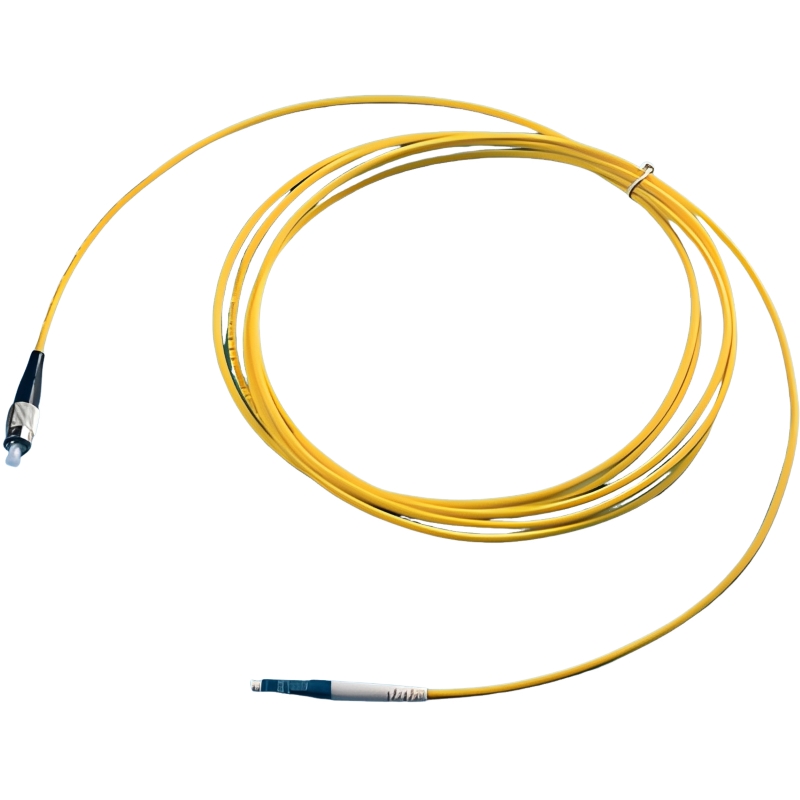
Which Hybrid Cord Fits Each Migration Path?
Map the installed port and the new port before selecting the cord. If either port is uncertain, inspect the equipment label and approved transceiver documentation rather than relying on connector colour alone.
| Legacy side | New side | Typical hybrid assembly | Critical control |
|---|---|---|---|
| FC instrument or frame | LC patch panel or equipment | FC-to-LC simplex or duplex as required | Keyed FC orientation, polish and service direction |
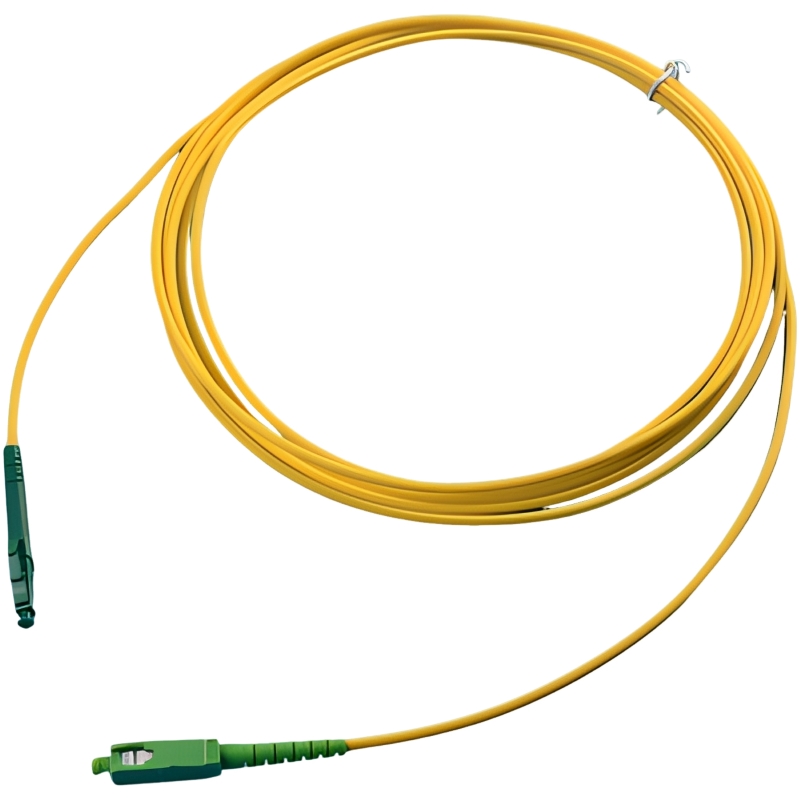
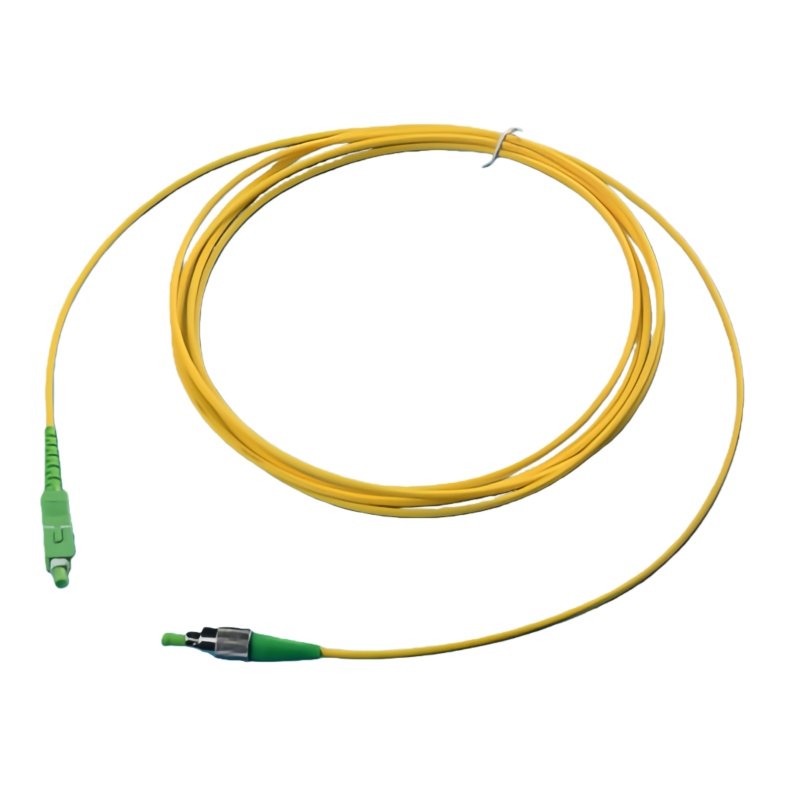
| SC access equipment | LC switch or dense panel | SC-to-LC assembly | APC versus UPC must match each actual port |
| ST industrial or campus port | LC equipment | ST-to-LC cord | Bayonet seating, fibre category and bend path |
| SC duplex service | LC duplex service | SC duplex to LC duplex | A/B mapping and clip orientation |
| Mixed panel during phased cutover | New panel plus retained legacy ports | Clearly labelled hybrid spares | End-specific labels and stock segregation |
How Should a Hybrid Migration Be Documented?
The cord becomes part of the migration record. If it is labelled only by length, later maintenance teams may replace it with a physically mating but optically wrong assembly.
Name End A and End B
Put the equipment or panel role, connector type and polish on each end of the drawing and label. Use the same names in the rack elevation and port schedule so the cord cannot be reversed during a hurried change.
Confirm fibre compatibility
Match single-mode or multimode category to the installed link and the active interfaces. A hybrid connector does not translate between fibre types or repair an unsupported reach. Treat any transition between fibre categories as an engineering decision.
Count every connection
A direct hybrid cord removes an adapter pair compared with two cords and a coupler, but the total link still includes equipment and panel connections. Update the loss budget and acceptance limit for the actual route.
Plan the end state
Decide whether the hybrid cord is permanent or temporary. Temporary migration cords need removal dates and replacement work orders; permanent cords need stocked spares and controlled drawings like any other service component.
Migration Risks to Close Before Cutover
The table separates connector compatibility from operational readiness. Both need to pass before the old path is disconnected.
| Risk | Pre-cutover check | Handover evidence | Fallback |
|---|---|---|---|
| Wrong polish at one end | Inspect port labels and approved equipment documents | End-A and End-B photos with drawing | Correctly identified spare cord |
| Fibre category mismatch | Trace installed fibre records and transceiver requirements | Cable and equipment schedule | Retain old path until test passes |
| Duplex polarity reversal | Continuity test through the full route | A/B map and measured channel record | Approved reversible action or replacement |
| Cord routed under strain | Trial the exact length and bend path | Rack photograph and slack location | Alternate route or revised length |
| No replacement stock | Verify spare part and label before cutover | Spare inventory record | Keep adapter-based temporary kit available |
Normes et justificatifs à joindre au bon de commande
La spécification consolidée actuelle de l'interface de la gamme SC comprend des références concernant la découpe de l'adaptateur monté et la force de compression de la virole. Voir Norme IEC 61754-4 relative à l'interface SC.
Cette publication de la CEI définit les dimensions standard des interfaces de la gamme de connecteurs LC. Voir Norme IEC 61754-20 relative à l'interface LC.
L'édition 2024 précise les modalités d'inspection et d'essai des câblages à fibres optiques installés. Voir ISO/IEC 14763-3:2024 — Essais sur les câbles optiques.
Hybrid Cord RFQ Checklist
A hybrid cord should make the migration simpler, not make the interface ambiguous. Lock both ends, fibre type, polarity, length, jacket and test evidence to the named route, then keep the same definition for spares.
- Identify End A and End B by equipment or panel role
- State connector type and polish independently for both ends
- Confirm fibre category and duplex polarity
- Provide installed routing length and jacket requirement
- Request individual optical results and matching labelled spares
Pour obtenir un devis sur mesure, consultez le site de Fenxi fiber optic patch cord range, single-mode patch cords, multimode patch cords, et OS2 and multimode selection guide. Veuillez nous communiquer le marché cible, les interfaces de raccordement, le type de fibre, la structure du câble, les quantités, la révision du plan et les rapports d'essais requis. La réponse permettra alors de distinguer les options standard du catalogue des articles nécessitant une confirmation ou un outillage sur mesure.