
Introduction: The Green Connector That Powers High-Performance Networks
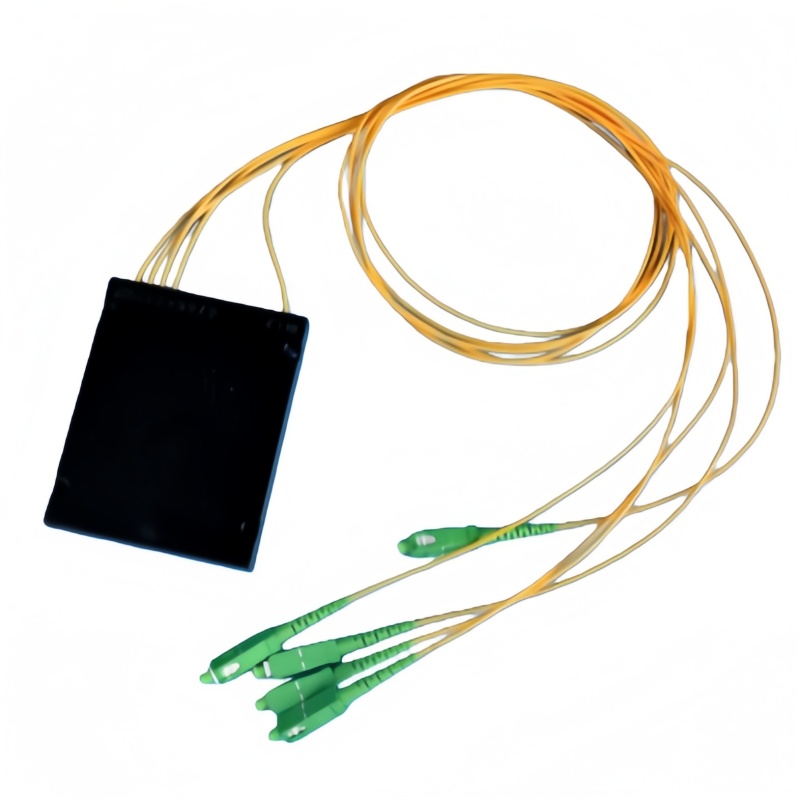
Walk into any fiber optic patch panel, telecommunications headend, or FTTH distribution cabinet, and one color stands out immediately: green. That distinctive green connector housing is the universal signature of SC APC (Angled Physical Contact) — a fiber optic connector type that has become the gold standard for applications where signal integrity cannot be compromised.
The SC connector itself has been a workhorse of the fiber industry since its development by NTT in the 1980s. With its square, push-pull design and robust 2.5mm ferrule, the SC form factor earned its place in networks worldwide through simplicity and reliability. By 2025, SC remains the dominant connector in FTTH deployments, especially for drop cables and ONT terminations, as well as in many enterprise applications.
But the “APC” designation is what transforms this ubiquitous connector from good to exceptional. That 8-degree angle ground into the ferrule end-face represents one of the most important innovations in fiber optic connectivity — one that enables the high-precision performance demanded by modern networks.
The SC fiber optic connector market itself tells the story of this technology’s enduring relevance. In 2025, the global SC fiber optic connector market was valued at approximately $903 million, with steady growth projected through the coming decade. Other analyses estimate the broader SC connector market at $245.26 million in 2025, expected to reach $271.27 million by 2026 and $505.29 million by 2032, growing at a robust CAGR of 10.87%. The overall fiber optic connector market is even larger, valued at $5.3 billion in 2024 and projected to reach $9.8 billion by 2032, growing at 7.4% CAGR.
In this comprehensive guide, we will unpack everything you need to know about the SC APC connector: what it is, how the 8-degree angle polish works at the physical level, the critical benefits that make it indispensable for specific applications, how it compares to alternative connector types, and practical guidance for selection, installation, and troubleshooting. Whether you are designing a CATV network, deploying FTTH infrastructure, building a precision sensing system, or simply trying to understand why your equipment specifies “SC/APC Only,” this article will provide the knowledge you need.
Part 1: Decoding the Name — What Does “SC APC” Mean?
1.1 The SC Connector: Origin, Design, and Enduring Popularity
The acronym “SC” stands for Subscriber Connector — though some in the industry also refer to it as Standard Connector or Square Connector. Developed by NTT (Nippon Telegraph and Telephone) of Japan in the 1980s, the SC connector was designed to address the practical limitations of earlier connector types, particularly the threaded FC (Ferrule Connector) that required rotation during mating.
The SC connector is composed of a plastic housing with a 2.5mm outer diameter zirconia ceramic ferrule. Its defining characteristics include:
Push-Pull Latching Mechanism: Unlike screw-on connectors such as FC, the SC uses a simple push-pull action to engage and disengage. This design eliminates the need to rotate the connector body, making it far easier to use in dense patch panels where finger access is limited.
Square Housing: The square shape provides positive orientation and prevents the connector from rotating once inserted. This ensures consistent alignment and reduces the risk of ferrule damage from twisting.
Audible Click: When properly mated, the latch produces an audible click that provides tactile and auditory confirmation of a successful connection — a small but valuable feature in the field.
Ceramic Ferrule: The 2.5mm ferrule, typically made from zirconia ceramic, offers excellent dimensional stability, hardness, and thermal expansion characteristics that closely match the silica fiber it houses. High-precision manufacturing ensures that the fiber core is centered within the ferrule to within sub-micron tolerances.
The SC connector’s interface standards are formally outlined in IEC 61754-4 and TIA-604-3, with end-face geometry specified in IEC 61755-3-1. The current version, IEC 61754-4:2022, specifies the standard interface dimensions for the type SC family of connectors, representing the third edition and constituting a technical revision from the earlier 2013 edition. This standardization ensures interoperability between components from different manufacturers and provides a consistent baseline for performance expectations.
Because of its high performance and ease of operation, SC connectors can be found in products throughout the entire world. Even with the proliferation of smaller-form-factor connectors like the LC (Lucent Connector) with its 1.25mm ferrule, SC remains widely deployed in access networks, CATV systems, and test equipment where its robustness and reliability are valued over density.
1.2 The APC Designation: What “Angled Physical Contact” Actually Means
The “APC” designation refers specifically to the polish applied to the ferrule end-face. APC stands for Angled Physical Contact, and the key word is “angled.” In an SC APC connector, the ceramic ferrule end-face is polished at an angle of 8 degrees relative to the perpendicular plane of the fiber axis.
This seemingly simple geometric modification has profound implications for how the connector handles reflected light. To understand why, we must first understand what happens at any fiber-to-fiber interface.
In a PC (Physical Contact) or UPC (Ultra Physical Contact) connector, the ferrule end-face is polished perpendicular to the fiber axis. When light encounters this interface, a small portion — due to the Fresnel reflection at the glass-air-glass boundary — is reflected straight back toward the source. This back-reflection can travel the entire length of the fiber and re-enter the laser cavity, causing instability and signal degradation.
In an APC connector, that 8-degree angle changes the geometry of reflection entirely. Instead of reflecting straight back down the core, the angled end-face directs reflected light into the fiber cladding at an angle greater than the critical angle for total internal reflection. This reflected light is then rapidly attenuated as it propagates through the cladding, effectively eliminating it as a source of interference.
The APC connector was developed specifically to achieve extremely low back-reflection. Industry research indicates that when the slanted angle is more than 8 degrees, return loss values can reach less than -60 dB — a reduction in reflected power of at least three orders of magnitude compared to a PC connector, and at least one order of magnitude compared to a UPC connector.
Critically, APC connectors must only be mated with other angled-polished connectors. Mating an APC connector with a UPC connector will prevent proper physical contact, resulting in high insertion loss, excessive back-reflection, and potential permanent damage to the angled ferrule.
1.3 Visual Identification: Why SC APC Connectors Are Green
The industry has standardized on a green color code for SC APC connector bodies, boots, and adapter housings. In contrast, UPC connectors are typically blue, while PC connectors for multimode applications are often beige or black.
This color coding is not merely aesthetic — it serves a critical safety and performance function. Because APC and UPC connectors are physically incompatible (they should never be mated), the green color provides an immediate visual cue that technicians can use to verify proper mating compatibility.
The Orbray SC connector specifications, for example, list housing colors as: Blue for PC single-mode, Green for APC, and Beige for multimode. This consistent color coding across manufacturers helps prevent costly mistakes in the field.
Part 2: The Physics of the 8-Degree Angle — How APC Polish Works
2.1 The Fundamental Problem: Back-Reflection in Fiber Connectors
To appreciate why the 8-degree angle matters, we need to understand the problem it solves. In any fiber optic connection, some light is inevitably reflected back toward the source. This happens because the refractive index of the fiber core (approximately 1.47 for standard single-mode fiber) is different from the refractive index of air (approximately 1.0). At the interface between these two media, Fresnel reflection occurs.
The amount of reflected power depends on the refractive index mismatch and the quality of the physical contact between the mated fibers. Even with perfect physical contact — meaning the two fiber cores are in direct, gap-free contact — a small amount of reflection occurs due to the intrinsic refractive index difference.
In a perpendicular polish (UPC or PC), this reflected light travels straight back down the fiber core toward the source. If that source is a laser, the reflected light can enter the laser cavity and destabilize its operation. This phenomenon, known as optical feedback, can cause:
- Increased relative intensity noise (RIN)
- Wavelength drift
- Mode hopping
- Reduced coherence length
For digital transmission systems with moderate data rates, these effects may be tolerable. But for analog systems, high-precision measurement equipment, and coherent optical communication, even small amounts of back-reflection can be catastrophic.
2.2 How the 8-Degree Angle Eliminates Back-Reflection
The 8-degree angled polish solves this problem through simple geometry. When light traveling down the fiber core reaches the angled end-face, it encounters the glass-air interface at an 8-degree angle rather than perpendicular.
The light that reflects at this interface follows the law of reflection: the angle of reflection equals the angle of incidence. With an 8-degree incident angle, the reflected light is directed at an angle of 16 degrees relative to the original propagation direction.
Crucially, this 16-degree angle is greater than the acceptance angle of the fiber core. The reflected light does not couple back into the core. Instead, it enters the cladding where it is rapidly attenuated and dissipated. The result is that essentially no reflected light returns to the source.
The angle is not arbitrary. Research has established that 8 degrees represents an optimized compromise:
- If the angle were too shallow (less than approximately 6 degrees), the reflected light would not be sufficiently diverted into the cladding to ensure total internal reflection and rapid attenuation. Some light would still couple back into the core.
- If the angle were too steep (greater than approximately 12 degrees), the insertion loss would increase significantly as the light path requires more dramatic refraction at the interface. Manufacturing tolerances would also become more challenging.
The 8-degree standard emerged through extensive research and practical experience, and the industry has converged around this value as the de facto standard for APC connectors.
2.3 Return Loss: The Key Performance Metric for APC Connectors
Return loss is the parameter that quantifies the effectiveness of the APC design. It expresses the ratio of reflected optical power to incident optical power, measured in decibels (dB). A higher return loss value indicates lower reflection.
Table 1: Comparison of Return Loss Specifications by Connector Polish Type
| Connector Polish Type | Typical Return Loss | Industry Standard Minimum | Reflected Power (Approx.) | Typical Applications |
|---|---|---|---|---|
| PC (Physical Contact) | -30 to -40 dB | -40 dB | 0.1% to 0.01% | Legacy multimode, some single-mode |
| UPC (Ultra Physical Contact) | -50 to -55 dB | -50 dB | 0.001% to 0.0003% | Digital telecom, data centers, GPON |
| APC (Angled Physical Contact) | -60 to -70+ dB | -60 dB | 0.0001% to 0.00001% | CATV, RFoF, high-power, test equipment |
Sources: Industry standards and manufacturer specifications
The decibel scale is logarithmic, which means the differences between these numbers are far more dramatic than they appear. An improvement from -50 dB (UPC) to -65 dB (APC) represents a reduction in reflected power of approximately 97% — a transformative difference for sensitive applications.
Industry standards provide clear guidance on minimum requirements. The industry recommendation is that UPC connector return loss should be -50 dB or greater, while APC connector return loss should be -60 dB or greater. In practice, premium APC connectors significantly exceed these minimums, with some manufacturers achieving return loss above 70 dB for single-mode APC types.
Part 3: SC APC Performance Specifications and Standards
3.1 Insertion Loss: The Other Critical Parameter
While return loss is the headline specification for APC connectors, insertion loss — the amount of optical power lost through the connection — remains equally important for overall link budget considerations.
Insertion loss for SC APC connectors typically ranges from 0.15 dB to 0.30 dB for standard-grade products, with premium connectors achieving values below 0.2 dB. The angled polish introduces a slight geometric inefficiency compared to perpendicular polishes, as the light path must refract slightly at the angled interface. This accounts for the marginally higher typical insertion loss of APC connectors compared to their UPC counterparts.
Table 2: SC APC Connector Specifications from Major Manufacturers
| Parameter | Diamond (Premium Grade) | CommScope (Standard Grade) | Orbray (Standard Grade) |
|---|---|---|---|
| Insertion Loss (Typical) | < 0.2 dB | ~0.3 dB | ≤0.1 dB (SM) |
| Insertion Loss (Maximum) | 0.4 dB | 0.34 dB | Specified per mated pair |
| Return Loss (Minimum) | > 70 dB | 65 dB | ≥60 dB |
| Return Loss (Typical) | > 70 dB | — | ≥60 dB |
| Mating Durability | High performance | 500-1000 cycles | 500 cycles (≤0.2 dB change) |
| Operating Temperature | -40°C to +85°C | -40°C to +85°C | -40°C to +85°C |
| Standards Compliance | IEC 61754-4 | IEC 61753-1, ANSI/TIA-568.3-D | IEC 61754-13, Telcordia GR-326-CORE |
Sources: Diamond, CommScope, Orbray product specifications
3.2 Premium Performance: Ultra-Low Loss (ULL) SC APC Connectors
For the most demanding applications — long-haul telecommunications, coherent optical systems, precision test equipment — ultra-low loss (ULL) SC APC connectors offer even tighter performance specifications.
Diamond’s SC connector family, for instance, incorporates patented Active Core Alignment (ACA) technology with a two-component ferrule design that ensures ultra-precise core centering. These premium connectors deliver typical insertion loss below 0.2 dB and return loss above 70 dB for APC single-mode versions. They are available in polarization-maintaining (PM), Power Solution (PS) for high-power applications, and VIS/NIR variants optimized for short-wavelength fibers and small mode fields.
CommScope also offers ULL-grade SC APC connectors with maximum insertion loss of 0.34 dB and minimum return loss of 65 dB, meeting IEC 61753-1 and ANSI/TIA-568.3-D standards. These specifications ensure that the connectors perform reliably across the full range of operating temperatures and after repeated mating cycles.
3.3 Standards Compliance: IEC, TIA, and Telcordia
SC APC connectors must comply with multiple international standards that define both their physical interface dimensions and their optical performance requirements:
IEC 61754-4: Defines the standard interface dimensions for the type SC family of connectors. The current third edition (2022) specifies all critical mechanical dimensions including ferrule diameter, spring force, and adapter interface geometry.
IEC 61755-3-1: Specifies the end-face geometry requirements for single-mode fiber connectors, including radius of curvature, apex offset, and fiber height.
TIA-604-3: The TIA equivalent to IEC 61754-4, defining SC connector interface standards for the North American market.
Telcordia GR-326-CORE: A rigorous reliability standard that specifies mechanical and environmental testing requirements including temperature cycling, humidity exposure, vibration, and mechanical shock.
IEC 61753-1: Defines performance standards for fiber optic connectors, including insertion loss and return loss requirements under various environmental conditions.
These standards ensure that SC APC connectors from different manufacturers can be mated interchangeably and will perform predictably in deployed networks.
3.4 Temperature Stability and Environmental Performance
SC APC connectors are designed to operate reliably across a wide temperature range, typically from -40°C to +85°C. This wide operating range is essential for outside plant applications where connectors may be exposed to extreme temperatures — from desert heat to arctic cold.
Temperature stability specifications ensure that insertion loss does not drift significantly as the connector expands and contracts. CommScope specifications, for example, limit insertion loss change due to temperature to 0.2 dB maximum. Orbray’s specifications limit temperature stability to ≤0.3 dB across the full -40°C to +85°C range.
Mating durability is another critical specification. SC APC connectors are typically rated for 500 to 1,000 mating cycles with insertion loss change of less than 0.2 dB. This ensures that connectors in patch panels and test ports can withstand years of repeated connections and disconnections without performance degradation.
Part 4: SC APC vs. SC UPC vs. LC APC — Making Sense of the Options
4.1 SC APC vs. SC UPC: The Polish Comparison
The most fundamental choice when specifying SC connectors is between APC and UPC polish. Both use the same SC form factor with a 2.5mm ferrule, but their end-face treatments create dramatically different performance characteristics.
Table 3: SC APC vs. SC UPC Comprehensive Comparison
| Parameter | SC UPC | SC APC |
|---|---|---|
| End-Face Polish | Flat with slight convex curve | 8-degree angled polish |
| Typical Return Loss | -50 to -55 dB | -60 to -70+ dB |
| Typical Insertion Loss | 0.15–0.30 dB | 0.15–0.30 dB |
| Color Code (2025 Standard) | Blue housing | Green housing |
| Back-Reflection Level | 0.001%–0.0003% | 0.0001%–0.00001% |
| Primary Applications | Digital telecom, data centers, GPON | CATV, RFoF, analog video, high-power, test equipment |
| Compatibility | Mates only with UPC | Mates only with APC |
| Relative Cost | Lower | Slightly higher |
Sources: Manufacturer specifications and industry analysis
The performance differences translate directly into application suitability:
SC UPC is the standard choice for digital telecommunications and data center applications where return loss requirements are less stringent. In Ethernet, GPON, and most digital fiber links, -50 dB return loss is perfectly adequate.
SC APC is the superior choice for any application where back-reflection must be minimized — particularly analog video (CATV), RF over Fiber (RFoF), high-power optical systems, and precision test and measurement equipment. For high-performance RF applications like CATV, L-Band, and GPS fiber links, APC connectors are the best option due to their superior reflection control.
By 2025, SC APC is the superior choice for the vast majority of new deployments — especially any PON-based FTTH, CATV, or high-bit-rate system.
4.2 SC APC vs. LC APC: Form Factor Trade-Offs
While the APC polish delivers the same return loss performance regardless of connector form factor, the choice between SC and LC involves different considerations:
SC (2.5mm Ferrule):
- Larger ferrule is easier to handle and clean
- Push-pull latching mechanism is robust and intuitive
- Excellent for field-deployed equipment and test ports
- Lower port density in patch panels
LC (1.25mm Ferrule):
- Half the diameter enables approximately twice the port density
- RJ-45 style latch mechanism
- Dominant in high-density data center applications
- Smaller ferrule requires more careful handling and cleaning
Both SC APC and LC APC achieve return loss of 60-70+ dB and insertion loss of 0.2-0.5 dB. The choice between them is primarily driven by density requirements versus ease of handling, with SC preferred for access networks and field applications, and LC dominating in data center and high-density equipment interfaces.
4.3 When APC Is Absolutely Required
Certain applications categorically require APC polish — UPC is simply not an acceptable substitute:
Analog Video Distribution (CATV): Any connector in the optical path between the headend transmitter and the optical node must be APC to prevent reflections from degrading picture quality. Reflected light in analog systems appears as ghost images, carrier-to-noise ratio degradation, and composite second-order distortion.
RF over Fiber (RFoF): The wide bandwidth and stringent linearity requirements of RFoF links demand the high return loss that only APC can provide. Reflections can create frequency-dependent ripple in the link transfer function.
High-Power Optical Systems: Applications exceeding approximately 20 dBm (100 mW) of optical power should use APC connectors to minimize the risk of connector damage from optical feedback and thermal effects.
Optical Test Equipment: OTDRs, optical loss test sets, and return loss meters must be equipped with APC ports to ensure measurement accuracy. A high-reflection connector at the instrument port creates dead zones that obscure near-end events.
Coherent Optical Systems: The phase-sensitive detection used in modern coherent systems (400G, 800G, 1.6T) makes them vulnerable to back-reflection-induced phase noise. APC connectors are essential for maintaining phase stability.
Part 5: Applications — Where SC APC Connectors Excel
5.1 FTTH and PON Networks
Fiber-to-the-Home (FTTH) and Passive Optical Network (PON) deployments represent the largest application base for SC APC connectors. By 2025, SC remains the dominant connector in FTTH, especially for drop cables and ONT (Optical Network Terminal) terminations.
In PON architectures — including GPON, EPON, XGS-PON, and NG-PON2 — the optical distribution network includes multiple connectors at the central office, fiber distribution hubs, and subscriber premises. Each connector represents a potential source of back-reflection.
While GPON and EPON digital transmissions are relatively tolerant of moderate reflections (UPC may be acceptable), many PON deployments now incorporate RF overlay for CATV services. This RF overlay operates at 1550 nm and is extremely sensitive to reflections. For this reason, SC APC has become the standard connector choice for PON-based FTTH deployments.
The SC/APC to RF analog signal interface is standard in FTTH CATV receivers, which convert optical signals to RF for coaxial distribution. SC/APC fiber optic adapters are widely used in FTTH drop points and CATV applications, providing robust performance for long-term deployments.
5.2 CATV and Broadband Distribution
Cable television networks represent one of the largest deployed bases of analog optical transmission systems. Modern CATV architectures use hybrid fiber-coaxial (HFC) topologies, where optical fiber carries signals from the headend to neighborhood nodes, and coaxial cable completes the final distribution.
In these systems, SC APC connectors are specified for the optical interfaces on CATV transmitters, optical nodes, and passive optical receivers. The reason is clear: analog video signals are exquisitely sensitive to optical reflections, which manifest as ghost images, degraded carrier-to-noise ratio, and increased composite second-order and triple-beat distortion.
For high-frequency RF systems, SC/APC connectors are used exclusively to minimize reflection and maximize signal fidelity. The green SC/APC connector has become synonymous with CATV optical interfaces.
5.3 5G Fronthaul and Telecommunications
The dense fiber infrastructure required for 5G radio access networks has created new demand for reliable, field-proven connectors. SC APC is well-suited for the eCPRI and CPRI interfaces that connect remote radio heads to baseband units in 5G fronthaul applications.
The surge in 5G network deployments has accelerated fiber deployments to support backhaul and fronthaul applications, driving demand for connectors with ultra-low insertion loss and heightened mechanical durability.
5.4 Data Centers and Enterprise Networks
While LC connectors dominate high-density data center applications, SC APC maintains a significant presence in specific roles:
- Fiber distribution frames and patch panels: The robust SC form factor handles frequent mating better than smaller connectors
- Test and measurement ports: Equipment manufacturers standardize on SC APC for test ports to ensure accurate measurements
- Long-haul telecommunications interfaces: SC APC provides the high return loss needed for amplified long-distance links
The SC fiber optic connector market is driven primarily by the robust growth in data centers, cloud computing infrastructure, and the escalating need for high-bandwidth connectivity in industrial automation and 5G deployments.
5.5 High-Power and Specialty Applications
SC APC connectors are essential for high-power optical systems including Raman amplifiers, high-power EDFAs, and industrial laser delivery systems. The angled end-face ensures that any light reflected at the interface is directed into the cladding rather than back toward the source, reducing the risk of laser damage from optical feedback.
Diamond’s Power Solution (PS) variants of SC APC connectors are specifically designed for high-power applications, with enhanced thermal management and damage resistance. These connectors can withstand repeated connection and disconnection under optical power levels far exceeding standard connector ratings.
Other specialty applications include polarization-maintaining (PM) fiber systems, interferometric sensing arrays, and quantum key distribution (QKD) networks — all of which require the exceptional return loss performance that only APC can provide.
Part 6: The Economics of SC APC — Cost, ROI, and Market Outlook
6.1 Initial Cost Considerations
SC APC connectors typically carry a modest premium over their SC UPC counterparts — generally 10% to 20% higher for comparable quality grades. This premium reflects the more complex polishing process required to achieve the precise 8-degree angle with proper end-face geometry.
However, this initial cost difference is negligible when viewed in the context of overall network deployment costs. For a typical FTTH installation, the connector cost represents a tiny fraction of the total cost per subscriber — often less than 1%. The performance benefits of APC polish far outweigh the minimal additional expense.
6.2 Total Cost of Ownership and ROI
The economic case for SC APC extends well beyond the initial connector cost. When all factors are considered, APC connectors often deliver superior return on investment through:
- Reduced troubleshooting costs: Reflections are notoriously difficult to diagnose in the field. Using APC connectors eliminates a major source of intermittent and hard-to-isolate problems.
- Higher network reliability: Fewer service calls and truck rolls translate directly to operational savings.
- Future-proofing: As networks upgrade to higher speeds and add RF overlay services, APC connectors are already in place and do not require replacement.
- Compatibility with next-generation technologies: Coherent PON, 50G/100G PON, and advanced RFoG architectures all require APC-level return loss performance.
6.3 Market Growth and Regional Dynamics
The SC fiber optic connector market is experiencing robust growth driven by multiple factors. The global SC fiber optic connector market was estimated at $245.26 million in 2025 and is expected to reach $271.27 million in 2026, growing at a CAGR of 10.87% to reach $505.29 million by 2032. A separate analysis covering a broader definition of SC connectors valued the market at $903 million in 2025, projecting steady growth with a 2.1% CAGR.
Longer-term projections indicate even stronger growth. The SC fiber connector market is anticipated to expand from $1.48 billion in 2024 to $10.86 billion by 2034, growing at a CAGR of approximately 22.1%.
Among the sub-segments, APC (Angled Physical Contact) connectors lead in performance due to their superior return loss characteristics, making them ideal for high-precision applications.
Geographically, Asia Pacific dominates both production and consumption of SC APC connectors, driven by China’s extensive FTTH deployments and 5G network build-out. North America and Europe represent mature markets with steady replacement demand and growth in specialized applications including CATV network upgrades and industrial automation.
Part 7: Best Practices for Installing and Maintaining SC APC Connectors
7.1 Critical Importance of Connector Cleanliness
The exceptional return loss performance of SC APC connectors is entirely dependent on a clean, undamaged end-face. Contamination on the fiber core can degrade return loss by 10-15 dB or more — effectively reducing an APC connector to UPC-level performance.
Proper cleaning procedures include:
Inspect every connector before mating: Use a fiber microscope with appropriate magnification (typically 200x to 400x) to evaluate end-face condition. Look for contamination, scratches, pits, or other defects.
Clean using proper tools: Use dry cleaning tools (specialized wipes or click-cleaners) first. If contamination persists, follow with wet cleaning using optical-grade isopropyl alcohol and lint-free wipes.
Re-inspect after cleaning: Verify that contamination has been removed and that no new scratches or defects have been introduced.
Use dust caps religiously: Always install dust caps on unmated connectors and adapters to prevent contamination ingress.
7.2 Proper Mating and Demating Techniques
SC connectors are designed for straight insertion and withdrawal — no rotation is required or desired:
To mate:
- Align the connector key with the adapter slot
- Push straight in until the latch clicks audibly
- Verify full seating by gently pulling back on the connector body (not the cable)
To demate:
- Grasp the connector body firmly
- Pull straight back — do not wiggle or twist
- Immediately install dust caps on both the connector and adapter port
Critical Warning: Never mate an APC connector with a UPC connector. The angle mismatch will prevent proper physical contact, resulting in high insertion loss (typically > 3 dB) and high back-reflection. Worse, the angled ferrule can be permanently damaged by contact with the flat ferrule.
7.3 Troubleshooting Common SC APC Issues
When an SC APC connection exhibits poor performance, systematic troubleshooting can identify the root cause:
High Insertion Loss: Check for contamination, improper seating, or ferrule damage. Verify that the mating connector is also APC polish.
Low Return Loss (High Reflectance): Contamination is the most common cause. Inspect and clean both connectors. If the problem persists, check for scratches or pits in the core region.
Intermittent Performance: Look for loose adapters, damaged latches, or fiber stress. Temperature cycling can cause intermittent issues if thermal expansion characteristics are poorly matched.
Complete Signal Loss: Verify fiber continuity. Check for macrobends near the connector exceeding bend radius specifications.
7.4 Testing SC APC Connectors
Proper testing requires attention to the connector’s APC characteristics:
- When using an OTDR, a properly connected APC connector pair generates a reflective event with typically less than 0.5 dB loss and -55 dB to -65 dB reflectance.
- Use a launch fiber with an APC connector to overcome the OTDR’s dead zone.
- For insertion loss testing, use a light source and power meter with appropriate APC reference cables.
- For return loss verification, use a dedicated return loss meter configured with an APC test port.
Part 8: The Future of SC APC Technology
8.1 Evolving Standards and Higher Performance Requirements
The standards landscape for fiber optic connectors continues to evolve. IEC 61754-4 is currently under active revision, with Amendment 1 expected to publish in December 2026. These ongoing updates ensure that SC connector specifications remain aligned with the performance requirements of next-generation networks.
As PON technologies push toward 50G and 100G, and coherent detection becomes more prevalent, the return loss requirements for connectors will only become more stringent. SC APC connectors are well-positioned to meet these evolving demands.
8.2 Integration with Next-Generation Networks
SC APC connectors will continue to play essential roles in several key growth areas:
Coherent PON: Next-generation PON standards are adopting coherent detection techniques that share the phase sensitivity of long-haul coherent systems. APC connectors are essential for maintaining the phase stability these systems require.
Quantum Communications: Emerging quantum key distribution (QKD) networks operate at single-photon levels, making them exquisitely sensitive to loss and reflections. APC connectors are essential for maintaining signal integrity.
Industrial Automation and IIoT: The increasing adoption of fiber optics in industrial environments — for process control, machine vision, and sensor networks — creates demand for robust, field-proven connectors. SC APC’s durability and reliability make it well-suited to these applications.
8.3 Manufacturing Innovation and Cost Reduction
Advances in automated polishing, inspection, and testing are improving consistency and reducing the cost of SC APC connectors. Field-installable connectors with pre-polished ferrules enable rapid deployment without fusion splicing, while improved materials and manufacturing processes continue to push performance boundaries.
The integration of AI-powered quality control in manufacturing ensures that every connector meets specification, while real-time monitoring capabilities embedded in connector assemblies enable predictive maintenance in deployed networks.
Frequently Asked Questions
Q1: What exactly does “SC APC” mean?
“SC” stands for Subscriber Connector (also called Standard Connector or Square Connector). It uses a 2.5mm ceramic ferrule and a push-pull latching mechanism. “APC” stands for Angled Physical Contact and refers to the ferrule end-face being polished at an 8-degree angle rather than perpendicular to the fiber axis. This angled polish dramatically reduces back-reflections.
Q2: Why is the 8-degree angle so important?
The 8-degree angle directs any reflected light into the fiber cladding instead of back toward the source. At an 8-degree incident angle, reflected light is deflected at 16 degrees relative to the original path — an angle greater than the core’s acceptance angle, ensuring that reflections are absorbed in the cladding rather than propagating back to the laser.
Q3: What is the typical return loss of an SC APC connector?
Standard-grade SC APC connectors achieve minimum return loss of 60 dB, with typical values of 65 dB or higher. Premium connectors from manufacturers like Diamond can achieve return loss above 70 dB. In contrast, SC UPC connectors typically achieve 50-55 dB return loss — a difference of at least 10 dB, representing a 90% reduction in reflected power.
Q4: Can I mate an SC APC connector with an SC UPC connector?
No. APC and UPC connectors should never be mated. The angled ferrule of the APC connector will not make proper physical contact with the flat ferrule of the UPC connector, resulting in high insertion loss (typically >3 dB) and high back-reflection. The angled ferrule can also be permanently damaged. The green color of APC connectors and blue color of UPC connectors help prevent mismating.
Q5: Why are SC APC connectors colored green?
The green color is an industry-standard visual identifier for APC polish. This color coding helps technicians quickly identify APC connectors and prevents costly mismating with UPC connectors (typically blue). The green housing, boot, or both indicate that the connector uses angled physical contact polish.
Q6: What applications require SC APC connectors rather than SC UPC?
SC APC is required for: (1) CATV and analog video distribution; (2) RF over Fiber (RFoF) links; (3) High-power optical systems (>20 dBm); (4) Optical test equipment (OTDR, power meters); (5) Coherent optical communication systems; (6) FTTH networks with RF overlay. For standard digital Ethernet and GPON without RF overlay, SC UPC may be acceptable.
Q7: What are the standards that govern SC APC connectors?
SC APC connectors must comply with IEC 61754-4 (interface dimensions), IEC 61755-3-1 (end-face geometry), TIA-604-3 (North American interface standard), and often Telcordia GR-326-CORE (reliability testing). Performance is specified per IEC 61753-1.
Q8: How long do SC APC connectors last?
SC APC connectors are typically rated for 500 to 1,000 mating cycles with insertion loss change of less than 0.2 dB. In infrastructure applications with proper maintenance and cleaning, connectors can provide reliable service for 20-30 years or more.
Q9: How do I properly clean an SC APC connector?
Inspect with a fiber microscope (200x-400x magnification) before cleaning. Use a dry cleaning tool (specialized wipe or click-cleaner) first. If contamination persists, use wet cleaning with optical-grade isopropyl alcohol and lint-free wipes, followed by a dry wipe. Always re-inspect after cleaning to verify results. Never use compressed air, which can drive contaminants deeper.
Q10: What is the difference between insertion loss and return loss?
Insertion loss measures the amount of optical power lost through the connection — typically 0.2-0.3 dB for SC APC. Return loss measures the amount of light reflected back toward the source — typically 60-70+ dB for SC APC. Both are important: insertion loss affects link budget and reach; return loss affects signal quality and laser stability.
Conclusion: The Enduring Value of SC APC
In an industry that constantly chases the next innovation — 1.6T coherent optics, hollow-core fiber, quantum networking — the SC APC connector stands as a testament to the power of getting the fundamentals right. The combination of the robust SC form factor and the elegant 8-degree angled polish solves a fundamental physical problem — Fresnel reflection at glass-air interfaces — with a solution that is both simple and profoundly effective.
The numbers speak for themselves. With a global SC connector market growing from $245 million in 2025 toward $505 million by 2032, and APC connectors leading the performance sub-segments, SC APC technology is not fading into obsolescence — it is becoming more essential than ever.
Whether you are a CATV engineer ensuring that 110 channels of analog video reach subscribers without ghost images, an FTTH technician connecting a subscriber to a PON network, a test engineer characterizing fiber spans with sub-meter precision, or a network architect future-proofing infrastructure for coherent optics, the SC APC connector is more than just one option among many. It is the essential choice for applications where signal integrity cannot be compromised.
As the global fiber optic connector market expands toward $9.4 billion by 2031 and SC APC connectors continue to demonstrate their superior performance in demanding applications, one thing is clear: the green connector is here to stay. Understanding what it is, how it works, and why it matters is essential knowledge for anyone who designs, deploys, or maintains fiber optic networks.