
A shuttered fibre adapter can reduce open-port contamination and support safer handling procedures, but it does not eliminate inspection, cleaning or laser controls. Approve the shutter as part of the complete adapter: it must clear the connector, survive service cycles, permit cleaning and fit the target panel without blocking adjacent ports.
Dense panels spend part of their life with ports unused, and every open port is a route for dust. A shutter adds a physical barrier, but also adds a moving part in front of the optical interface. Procurement should ask how the shutter opens, what touches the connector, how technicians inspect the sleeve, and how a failed shutter is replaced without disturbing live fibres.
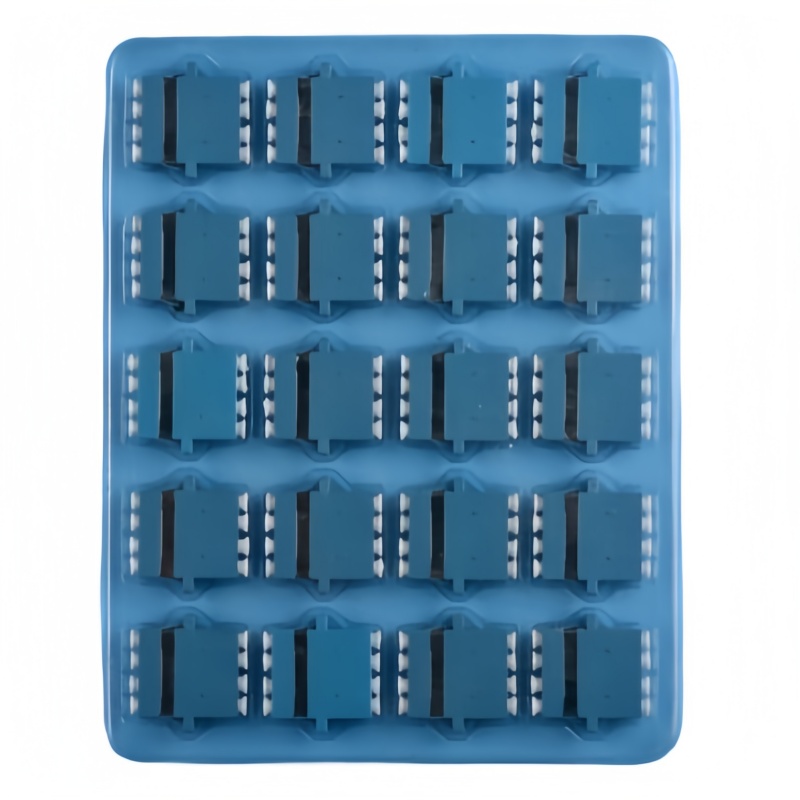
What Does a Shutter Change in Adapter Operation?
The shutter changes contamination exposure and technician interaction, not the underlying need for a clean aligned connection. Review both benefits and added service steps.
| Operational point | Open adapter | Shuttered adapter | Buyer verification |
|---|---|---|---|
| Unused-port exposure | Needs a separate dust cap maintained by the technician | Port closes when the plug is removed, depending on design | Inspect the closed gap and contamination barrier |
| Connection action | Plug enters the adapter directly | Plug or technician action opens the shutter | Check insertion force and connector clearance |
| Inspection access | Probe enters the open port with the correct tip | Probe must open or bypass the shutter safely | Demonstrate inspection with the selected probe |
| Cleaning access | Standard adapter tools can reach the sleeve | Tool geometry must work through the shutter | Approve cleaning tool and work instruction |
| Failure mode | Lost dust cap or contaminated sleeve | Stuck, broken or contaminated moving part | Durability record and field replacement method |
How Should Shuttered Adapters Be Qualified?
Use the same connector, panel and service tools that technicians will use. A catalogue sample tested outside the panel will not reveal latch access or interference between adjacent shutters.
Check the panel cutout
Confirm flange, latch, thickness range and orientation on the controlled drawing. Install a full row in the target panel and verify that every port seats securely without distorting the adapter body.
Verify tool access
Demonstrate inspection and cleaning through the shutter using the actual probe tips and cleaning tools. The procedure should not require technicians to hold the shutter open with an improvised object near the ferrule.
Run service cycles
Mate and unmate the specified connector while monitoring shutter movement, housing damage and optical performance. Record cleaning actions at defined points rather than cleaning only after a failure.
Plan replacement
Decide whether one adapter can be replaced from the front, whether a duplex or quad block forces multiple ports out of service, and which spare part matches the panel. Put that method into the maintenance file.
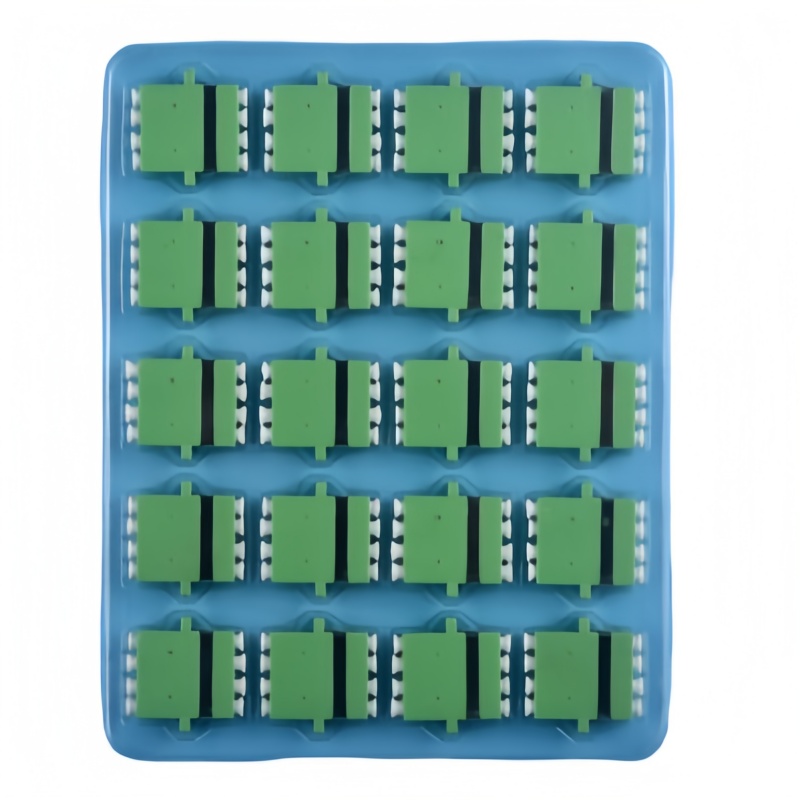
Dense-Panel Acceptance Checks
The panel is the real test fixture. Use these checks on a populated sample before accepting a large production lot.
| Check | Method | Pass evidence | Reason |
|---|---|---|---|
| Mounting fit | Populate the target cutout and panel thickness | No movement, distortion or blocked latch | Prevents field modification of the panel |
| Connector clearance | Mate plugs in adjacent ports | Full seating and accessible release mechanisms | Confirms maintainability at density |
| Inspection and cleaning | Use approved probe and cleaning tools | Procedure completed without improvised access | Keeps the shutter from blocking maintenance |
| Shutter return | Cycle each port and inspect closure | Consistent closure without sticking or fragments | Controls open-port contamination |
| Optical condition | Inspect and measure before and after cycling | Results meet the project acceptance method | Confirms the moving mechanism has not damaged the interface |
Standards and Evidence to Put Behind the Purchase Order
This IEC publication defines the standard interface dimensions for the LC connector family. See IEC 61754-20 LC interface standard.
The 2022 edition covers end-face debris, scratches and defects and states that visual inspection does not replace optical qualification. See IEC 61300-3-35 connector inspection.
The 2026 edition evaluates optical and mechanical degradation through repeated mating cycles and adds updated cleaning criteria and severity levels. See IEC 61300-2-2:2026 mating-durability test.
Implementation Notes
Use shuttered adapters where the operational benefit is clear and the service procedure has been tested. Keep dust caps for shipping, keep inspection in the workflow, and qualify the shutter with the exact panel, connector and tools used on site.
- Confirm panel cutout and full-row fit
- Approve mating, inspection and cleaning tools
- Run controlled service-cycle testing
- Define how a failed shuttered adapter is replaced
- Stock the exact approved adapter revision as a spare
For a project-specific quotation, review Fenxi’s fiber optic adapter range, LC UPC duplex adapter, SC APC single-mode adapter, and fiber adapter selection guide. Send the destination market, connector interfaces, fibre type, cable construction, quantities, drawing revision and required test records. The response can then separate standard catalogue options from items that need confirmation or custom tooling.