
Choose the PLC splitter package after the cabinet, closure or rack interface is fixed. The optical circuit may be similar across formats, but tube diameter, pigtail exit, connector presentation, mounting method and technician access determine whether the assembly can be installed and serviced.
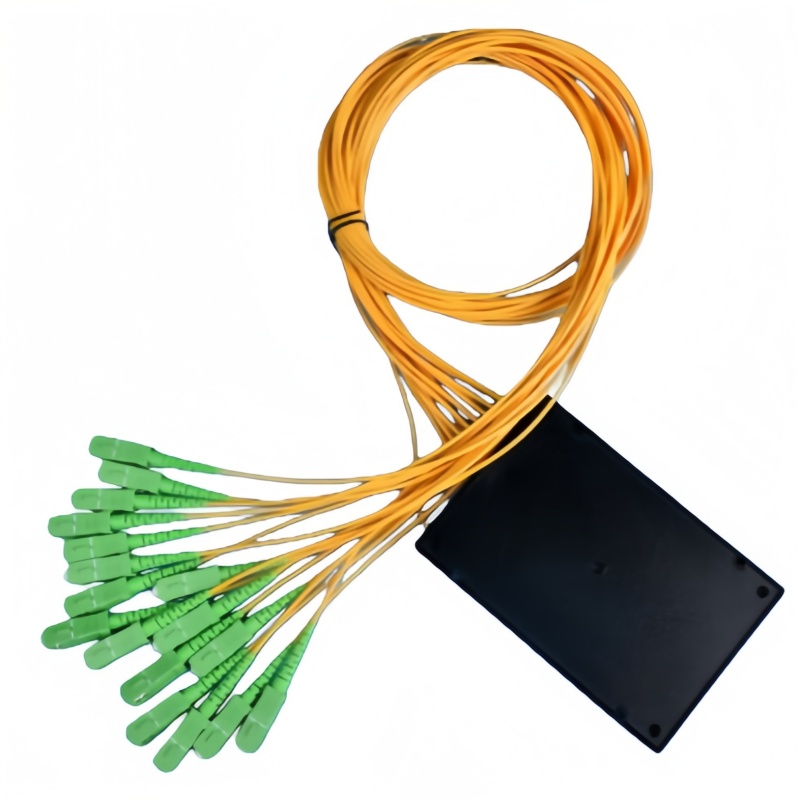
Bare-fibre and steel-tube units suit protected internal integration; ABS modules add mechanical protection; LGX, cassette and rack formats provide connectorized presentation and mounting features. Package names are not universal dimensional standards, so procurement should request a controlled outline drawing and test a production-representative sample in the target enclosure.

What Must Be Decided for PLC splitter package types?
Use the decision table to turn the topic into controlled purchase, design and acceptance inputs. Each row should be confirmed against the actual equipment, route and destination standard rather than copied from a generic catalogue.
| Decision area | What to specify | Why it matters | Evidence to retain |
|---|---|---|---|
| Installation location | Closure, wall box, cabinet or rack | Defines protection and mounting needs | Approved enclosure drawing |
| Fibre presentation | Bare fibre, pigtails or adapters | Changes splicing and patching work | Port and tail schedule |
| Mechanical envelope | Body, bend exits and mounting points | Controls fit and routing | Dimensioned outline |
| Service access | Cleaning, replacement and labels | Affects restoration time | Populated enclosure trial |
| Optical evidence | Port-level loss and uniformity | Links package to tested device | Serialized test report |
How to Control PLC splitter package types in the Project
The controls below connect the drawing, sample, production lot and installed result. They are deliberately practical: each one produces a record that procurement, engineering and field teams can review later.
Design from the enclosure inward
Reserve space for the package, tails, connectors, splice protectors and minimum routing radius. A module that fits an empty box may still block the cover or adjacent adapters after cabling.
Separate optical and mechanical requirements
State the split configuration and optical acceptance separately from package dimensions, cable lengths, connector types and mounting hardware. This prevents a correct optical device from arriving in the wrong mechanical format.
Approve the installed sample
Load one representative enclosure with the intended splitter, adapters and pigtails. Verify identification, cleaning access, tail routing and replacement sequence before volume release.
Control package substitutions
Require notification when the housing, exit boot, cable or connector supplier changes. Recheck fit and optical records against the approved drawing and sample.

Acceptance and Handover Checks
Agree the method and disposition before testing begins. A result without a defined record owner or failure action is difficult to use during shipment release or commissioning.
| Check | Method | Record | Failure action |
|---|---|---|---|
| Outline fit | Install in target enclosure | Fit photos and dimensions | Revise package or enclosure |
| Tail routing | Route every output | Routing record | Correct length or exit |
| Port identity | Trace input and outputs | Label and continuity map | Relabel before shipment |
| Optical test | Measure each required port | Serialized report | Quarantine failing unit |
| Service trial | Clean and replace sample | Technician sign-off | Improve access |
Standards and Evidence to Put Behind the Purchase Order
Corning lists component, module and rack formats and identifies GR-1209/1221 qualification for its PLC splitter range. See Corning PLC splitter qualification reference.
The 2025 paper describes GPON, XG(S)-PON, 50G-PON and coexistence references for access networks. See ITU broadband access technical paper.
The in-force 2024 recommendation defines bend-insensitive single-mode fibre categories and their application scope. See ITU-T G.657 bend-insensitive fibre recommendation.
RFQ checklist
Package selection is an enclosure-engineering decision as well as an optical purchase. Freeze the outline, fibre presentation, label scheme and port-level test record in the same approval package.
- Name the target enclosure
- Request a controlled outline drawing
- Specify tail and connector presentation
- Approve a populated sample
- Link each serial number to optical results
For a project-specific quotation, review Fenxi’s fiber optic splitter range, 1×16 SC APC PLC splitter, PLC and FBT splitter comparison, and PON power-budget planning guide. Send the destination market, connector interfaces, fibre type, cable construction, quantities, drawing revision and required test records. The response can then separate standard catalogue options from items that need confirmation or custom tooling.