
Uniformity, directivity and polarization-dependent loss describe different behaviours and must not be replaced by a single insertion-loss value. Lot acceptance should define the method, wavelengths, sample plan and disposition rule before shipment.
Uniformity compares output-port loss spread; directivity concerns unwanted coupling in the reverse direction; PDL describes loss variation with polarization. Values depend on the stated configuration and method. Buyers should request raw port-level data and a product-specific specification rather than transferring limits from an unrelated package or split ratio.

What Must Be Decided for PLC splitter uniformity directivity PDL?
Use the decision table to turn the topic into controlled purchase, design and acceptance inputs. Each row should be confirmed against the actual equipment, route and destination standard rather than copied from a generic catalogue.
| Decision area | What to specify | Why it matters | Evidence to retain |
|---|---|---|---|
| Parameter definition | Formula, direction and units | Prevents inconsistent reports | Controlled specification |
| Wavelengths | Exact test wavelengths and condition | Results vary by wavelength | Test plan |
| Port coverage | Every output or approved sample | Finds weak channels | Raw port data |
| Sampling | Lot, level and switching rule | Controls inspection risk | Sampling instruction |
| Traceability | Device, lot, instrument and date | Supports investigations | Serialized record |
How to Control PLC splitter uniformity directivity PDL in the Project
The controls below connect the drawing, sample, production lot and installed result. They are deliberately practical: each one produces a record that procurement, engineering and field teams can review later.
Keep parameters separate
Report insertion loss by port, calculate uniformity from the defined set, and record directivity and PDL under their specified methods. A pass label without the underlying fields is not auditable.
Freeze methods before results
Agree wavelengths, launch, connectors, reference procedure and environmental condition in the purchase specification. Do not change a method after viewing a difficult lot.
Use a declared sampling plan
Choose the sample size and acceptance rule from the relevant inspection system and contract. AQL is a process for lot disposition, not a promise that every untested unit meets the limit.
Investigate patterns
Look for repeated weak port positions, package lots or connector types. Pattern review can find assembly or mapping problems that a simple pass count misses.
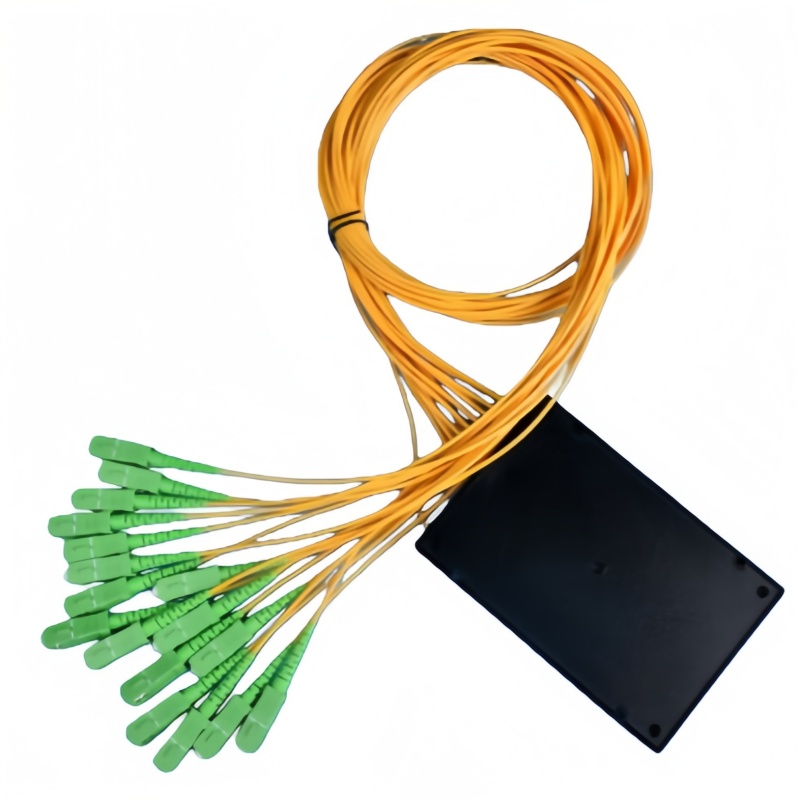
Acceptance and Handover Checks
Agree the method and disposition before testing begins. A result without a defined record owner or failure action is difficult to use during shipment release or commissioning.
| Check | Method | Record | Failure action |
|---|---|---|---|
| Method | Compare procedure to specification | Signed setup | Retest with correct method |
| Port data | Review every required channel | Raw table | Quarantine missing data |
| Calculations | Recalculate uniformity and summaries | QA worksheet | Correct report |
| Sampling | Verify lot and sample identities | Sampling record | Resample only by rule |
| Disposition | Record accept, reject or concession | Decision log | Contain rejected lot |

Standards and Evidence to Put Behind the Purchase Order
Corning lists component, module and rack formats and identifies GR-1209/1221 qualification for its PLC splitter range. See Corning PLC splitter qualification reference.
The 2026 edition defines AQL-indexed lot-by-lot attribute-sampling schemes and switching rules. See ISO 2859-1:2026 AQL sampling standard.
ISO 28590 gives guidance on selecting an inspection system from the ISO 2859 family. See ISO 28590 acceptance-sampling overview.
Acceptance checklist
A useful splitter certificate connects defined parameters to raw port data, equipment, sample identity and a pre-agreed lot decision. Keep all of those records under the same part revision.
- Define each parameter
- Name wavelengths and method
- Retain port-level results
- Use a declared sample plan
- Control retest and concession decisions
For a project-specific quotation, review Fenxi’s fiber optic splitter range, 1×16 SC APC PLC splitter, PLC and FBT splitter comparison, and PON power-budget planning guide. Send the destination market, connector interfaces, fibre type, cable construction, quantities, drawing revision and required test records. The response can then separate standard catalogue options from items that need confirmation or custom tooling.