
Procurement teams handling a mixed estate keep facing the same purchase-order problem: the test bench still runs on threaded FC patch cords, an older campus backbone carries ST, and every new FTTH or GPON drawing calls for SC. Ordering the wrong type means hybrid adapters on every panel, extra insertion loss, and a delayed rollout. This guide compares FC vs ST vs SC connectors on standards, optical performance, density, cost, and field behavior, then closes with an RFQ data sheet you can copy straight into a supplier enquiry.
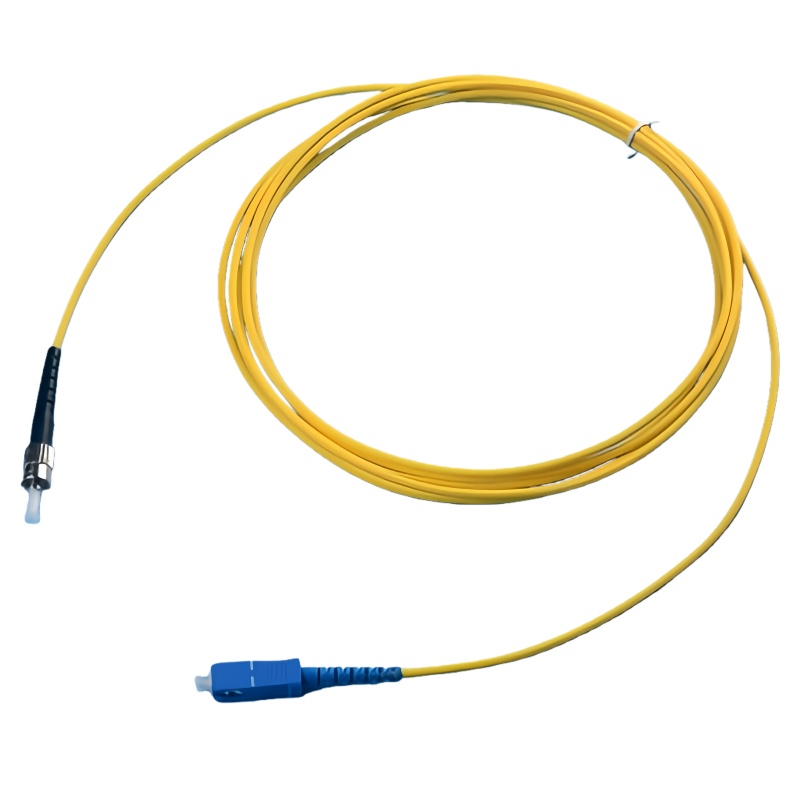
What Actually Differs: Coupling Mechanics and Governing Standards
FC, ST, and SC all use a 2.5 mm ceramic (usually zirconia) ferrule, so the glass-to-glass alignment geometry is similar. What separates them is the coupling mechanism and the housing, and each is defined by its own IEC 61754 subseries: IEC 61754-13 for FC, IEC 61754-2 for ST, and IEC 61754-4 for SC, with the TIA-604 FOCIS documents specifying matching dimensions for interoperability on the North American market. The mechanical difference drives everything else: mating speed, vibration resistance, panel density, and even which polish types are practical.
- FC (Ferrule Connector): round metal body, threaded coupling nut, slowest to mate, most stable under vibration.
- ST (Straight Tip): round housing, quarter-turn bayonet lock, fast to mate, legacy-oriented.
- SC (Subscriber Connector): square push-pull housing, fastest to install, designed for high-density panels and automated patching.
Ferrule material deserves a line in the RFQ as well. Zirconia ceramic ferrules hold geometry through hundreds of matings and are the default on all three families; cheaper steel-ferrule connectors exist in the market but drift out of alignment under thermal cycling, which shows up as rising insertion loss on links nobody has touched. When a bid arrives well below market price, ferrule material and polish provenance are the first two lines to question.
Insertion Loss and Return Loss Benchmarks
Optical performance overlaps heavily across the three types because the ferrule diameter is shared. The table below lists typical factory datasheet limits; always confirm the actual values against the supplier’s 100% test report, measured per IEC 61300-3-35 and referenced against end-face inspection practice on arrival.
| Parameter | FC | ST | SC |
|---|---|---|---|
| Governing IEC standard | IEC 61754-13 | IEC 61754-2 | IEC 61754-4 |
| Coupling | Screw-thread nut | Bayonet (quarter turn) | Push-pull latch |
| Typical max insertion loss | ≤0.3 dB (premium ≤0.2) | ≤0.3 dB | ≤0.3 dB (premium ≤0.2) |
| Return loss, SM UPC | ≥50 dB | ≥45–50 dB | ≥50 dB |
| Return loss, SM APC | ≥60 dB | Not commonly offered | ≥60 dB |
| Mating time, typical | 10–20 s (thread) | 2–3 s | 2–3 s |
| Approx. ports in a 1U panel | 24–36 | 24–48 | 48–96 |
Telcordia GR-326-CORE is the reference most quality-conscious buyers cite for single-mode connector durability and loss; it specifies, among other requirements, ferrule geometry and 500 mating-cycle performance. A supplier that tests to GR-326 and supplies the report per batch removes most of the qualification risk.
Multimode orders shift the numbers: typical return loss on multimode UPC polish sits around 20–35 dB because the geometric tolerance is looser and reflections matter far less at 850 nm short reach. Housing colors keep the two worlds apart on the panel — blue for single-mode UPC, green for single-mode APC, beige or aqua for multimode — and stating the color code explicitly in the purchase order prevents the most common mixed-shipment complaint buyers file with factories.
FC Connector: Test Benches, Instrument Ports, and Vibration
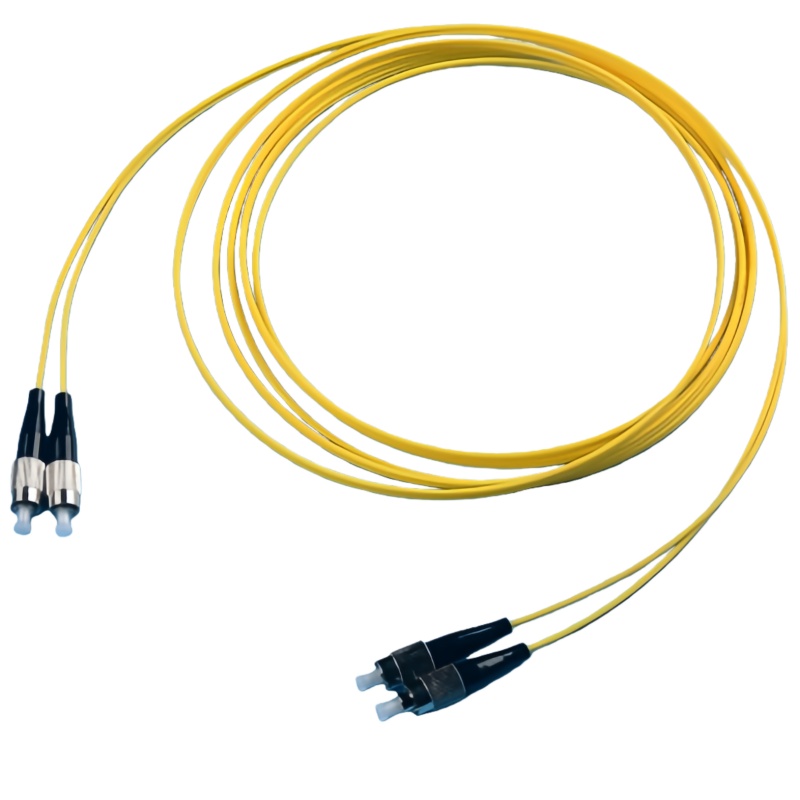
The threaded FC coupling is slow, but it stays put. That single property keeps FC alive wherever a connection is made once and disturbed rarely: OTDR and optical test equipment ports, telecom transmission racks, industrial sites with constant vibration, and outside-plant cabinets exposed to wind loading. The metal body also survives rough handling that would crack a plastic SC housing, and the alignment repeatability after re-mating is the best of the three, which matters when technicians reconnect the same reference cord daily.
The trade-offs are panel density and labor. Threading a nut takes ten to twenty seconds versus a snap of the fingers for SC, and metal bodies eat panel space. For buyers maintaining telecom central offices or instrument fleets, FC remains a required stock item; for anything new and dense, it is usually the wrong call. Our FC connector category covers UPC and APC versions with adjustable and non-adjustable boot options.
ST Connector: Legacy Campus and Industrial Reality
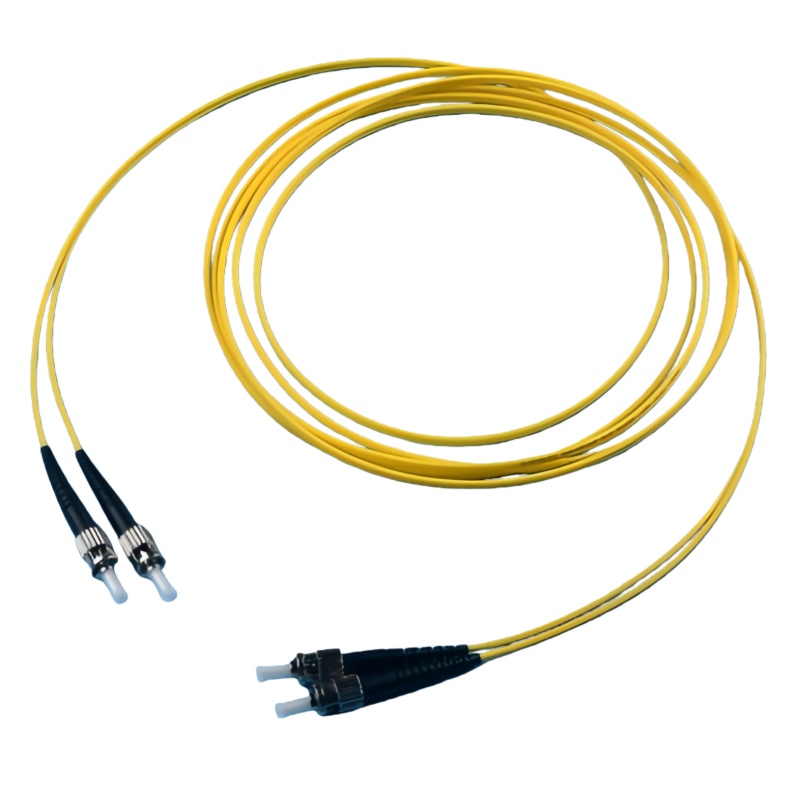
ST dates from the 1980s and became the default for early Ethernet over fiber (10BASE-FL) and campus multimode backbones. New standards work has moved on, yet the installed base explains why ST patch cords still move in volume across Southeast Asia, Latin America, Africa, and the Middle East: security camera heads, factory floors, university buildings, and utility substations were all wired with ST and will be maintained for years. Replacing a working ST backbone mid-life is rarely justified, so maintenance stock is the rational purchase.
Know the limits before you standardize on ST for anything new. There is no practical APC version, so analog video or high-reflection-tolerance RF links are better served by SC APC. Bayonet springs weaken with repeated matings, and the round housing accepts fewer ports per panel than SC. If you are sourcing for a legacy estate, the ST connector category lists simplex and duplex assemblies in 0.9, 2.0, and 3.0 mm cable.
SC Connector: The FTTH, CATV, and GPON Default
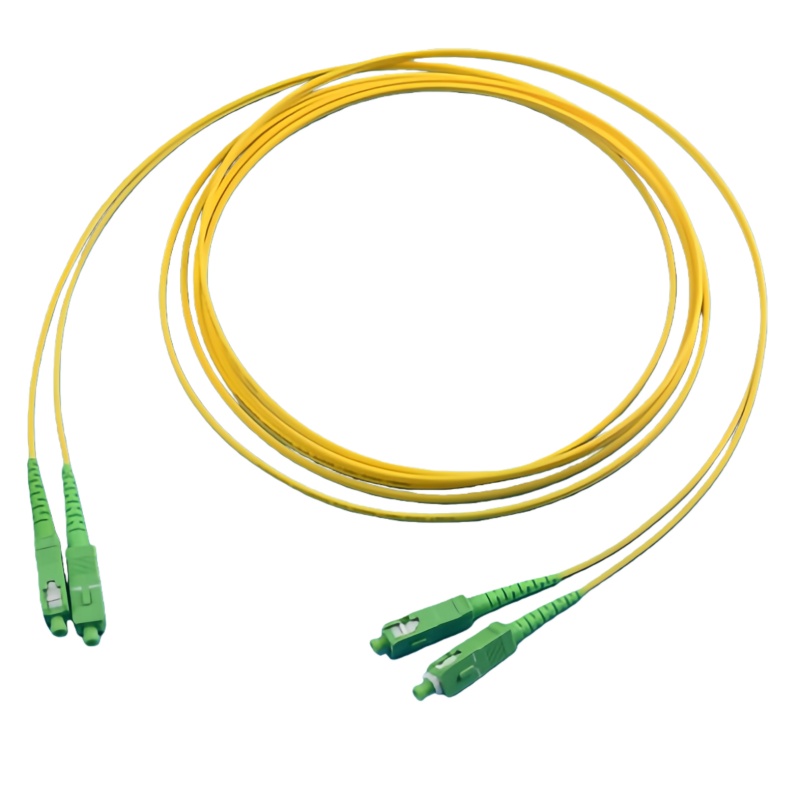
SC won the access market for practical reasons: push-pull latching that a technician can mate blind in a wall-mounted box, a square footprint that doubles ST/FC panel density, molded housing costs that fall with volume, and full UPC and APC availability. ITU-T G.984 GPON deployments and most CATV and RF-overlay networks specify SC, with SC APC (green housing) required where return loss above 60 dB matters, such as analog video or high-split ratio PON segments running over G.652.D single-mode fiber.
For anything newly built in the access network, the decision is usually settled: SC APC for the outside plant and ODN, SC UPC or LC inside the central office. See the SC connector category for UPC and APC assemblies, including armored and duplex options.
Selection Matrix by Application
| Application | Recommended | Why | Note |
|---|---|---|---|
| FTTH / GPON outside plant | SC APC | ≥60 dB return loss, fast field mating | Match APC on both ends; never mix with UPC |
| CATV / RF overlay | SC APC | Analog signals punish back-reflection | Confirm RL on the test report, not the datasheet |
| Test and measurement | FC UPC/APC | Best re-mating repeatability, vibration-proof | Keep reference-grade cords labeled and clean |
| Industrial / high vibration | FC (or SC with locks) | Threaded coupling cannot back off | Consider armored cable in the same order |
| Legacy campus / security | ST UPC (multimode) | Match the installed base | Maintenance stock, not new design |
| New high-density rack | LC instead | Double SC density, transceiver native | Plan cassettes, not loose connectors |
Mixing Connector Types Without Burning the Loss Budget
Where estates overlap, buyers reach for hybrid adapters first. Every LC-to-SC or FC-to-SC adapter adds roughly 0.3–0.5 dB, doubles the number of end faces to keep clean, and introduces a point of failure inside an already crowded panel. The better pattern is to change the interface once, at the patch cord: a factory-terminated FC-to-SC or ST-to-SC hybrid assembly keeps two connectors and no adapter in the path. The fiber optic adapter range covers the cases where an adapter is unavoidable, and the earlier adapter selection guide explains housing types and mounting formats in detail.
Whatever the mix, inspection discipline is constant. End-face quality per IEC 61300-3-35 zones, plus a visual check against the FOA connector identification reference, catches most field failures before they become truck rolls. Standardize each network segment on one connector type and polish, and keep TIA-604-compliant components on both sides of every mating pair.
RFQ Data Sheet for FC, ST, and SC Connector Orders
Copy this table into your enquiry e-mail. Suppliers can quote faster, and incomparable offers become comparable because every bidder answers the same eleven lines.
| # | Parameter | Example entry |
|---|---|---|
| 1 | Connector type and count | SC/APC x 2,000 pcs, one end; 500 pcs SC/APC-SC/APC |
| 2 | Polish type | APC (green) or UPC (blue); state per end |
| 3 | Fiber | OS2 G.652.D, or OM3/OM4 50 µm |
| 4 | Cable diameter | 0.9 mm (indoor/ODF), 2.0 or 3.0 mm (patching) |
| 5 | Jacket and rating | LSZH, OFNR, or PVC; state indoor/outdoor |
| 6 | Lengths | e.g. 1 m x 60%, 2 m x 30%, 3 m x 10% |
| 7 | Max insertion loss | ≤0.3 dB typical, ≤0.5 dB absolute |
| 8 | Min return loss | ≥60 dB APC / ≥50 dB UPC |
| 9 | Test report | 100% IL/RL report per IEC 61300-3-35, batch traceable |
| 10 | Standards compliance | IEC 61754-4, GR-326-CORE, RoHS |
| 11 | Packing and labels | Dust caps, individual bags, length/type label per cord |
Send the filled sheet to Fenxi for a same-week quotation with factory test reports attached. Mixing FC, ST, and SC in one purchase order is normal for us; tell us the installed base and we will match it connector for connector.